Tent Pegs and Marquee Stakes for Hard Ground — UK Guide for Hire Companies
Most searches for "tent pegs for hard ground" return camping gear reviews. This guide is for UK marquee hire companies who have encountered limestone, chalk, compacted clay, or showground aggregate and need a straight answer about what works and why. Our main guide to the subject is tent pegs and marquee stakes for hard ground, which covers hard standing and concrete as well; start there if you want the full picture.
Contents
Why Hard Ground Is a Different Problem
Hard ground does not just make installation harder. It changes what happens to your stakes at a material level. In soft to medium ground, a mild steel stake will drive adequately — the tip deforms slightly over many uses, but the rate of degradation is slow enough that it rarely causes immediate problems on site.
In hard ground, the same tip meets concentrated resistance on every blow. Mild steel deforms plastically under localised impact loads — each blow pushes the tip slightly off line, and each subsequent blow drives the stake further along that curve. A stake that goes in crooked comes out with difficulty, holds less reliably, and may leave a compromised baseplate or anchor point that causes problems on the next visit to the same venue.
The IFAI staking research is clear on the depth and holding-power relationship: every 50mm of lost embedment depth reduces pullout capacity by approximately 8%. A stake that should go to 900mm but reaches only 650mm in hard ground has already lost roughly 20% of its rated holding capacity before a single load is applied. In challenging conditions — chalky downland, limestone substrate, a compacted showground — that shortfall matters.
The fix is not just technique. It starts with the right steel and the right tip. See the complete guide to marquee stakes for a full treatment of material grades, and the UK ground types staking guide for a regional breakdown of where each condition occurs. This article focuses specifically on hard-ground selection and technique.
UK Ground Types That Create Hard-Ground Problems
The UK's geology is varied enough that the same hire company can encounter radically different ground conditions across a season. These are the ground types that create the most consistent hard-ground problems for marquee installers.
Limestone and Gritstone
Carboniferous limestone underlies much of the Yorkshire Dales, the Peak District, the Cotswolds, the Mendips, and parts of the North Wales uplands. Gritstone caps many Yorkshire and Derbyshire moorland sites. Both present shallow rock substrate — often at 150–300mm depth — over which a thin layer of topsoil sits. A stake that drives freely for the first 150mm can meet solid rock with no warning.
Venues with known limestone substrate include Chatsworth (Derbyshire), Castle Howard (Yorkshire magnesian limestone), and much of the Cotswold estate circuit. If you're working the country house market in northern or central England, limestone is a recurring condition rather than an exception.
On limestone sites, the practical limit for drive stakes is rock depth. Where rock is at 200mm, you cannot drive an 800mm stake to meaningful embedment. Gang staking with shorter stakes, or screw anchors where appropriate, become the correct response. We can advise on this — get in touch with the site details.
Chalk and Flint (South and East England)
Chalk underlies the South Downs, North Downs, Chilterns, East Anglian heights, and much of Wiltshire and Dorset. The chalk itself is relatively penetrable under sustained driving — it compresses and crumbles under impact, which creates a different problem. Flint nodules embedded in chalk are harder than mild steel and deflect tips without warning.
Chalk also tends to crumble when driven hard with repeated heavy blows, which enlarges the hole around the stake shaft and reduces friction grip. The result can be a stake that feels solid when first driven but has less holding power than the embedment depth would suggest. Venues with chalk substrate include Goodwood (West Sussex), Highclere Castle (Hampshire), and most South Downs estate and vineyard event sites.
For chalk: drive steadily rather than with repeated heavy blows. A pilot hole drilled 4–6mm narrower than the stake diameter before driving significantly reduces crumbling and retains more compression grip — the full method is covered in the driving technique section below.
Heavy Clay — Baked Dry (Summer)
London Clay, Gault Clay, and Kimmeridge Clay run across much of South-East and Central England. In autumn and winter these are plastic and waterlogged. In June through August they are often close to concrete. The same venue can present radically different ground conditions depending on when you're on site — a site survey in April gives no reliable indication of July conditions.
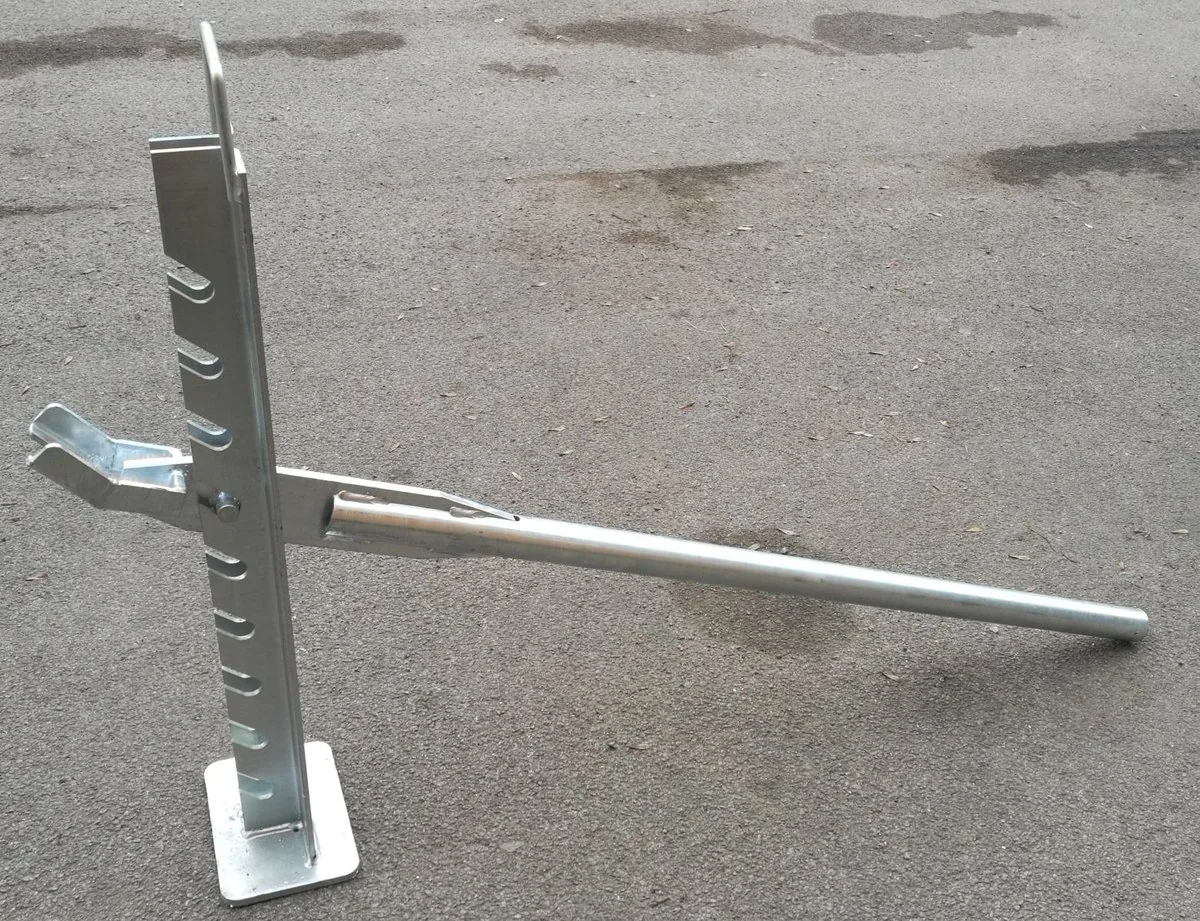
Dry clay is also one of the most difficult extraction conditions: it seals around the stake shaft as it cools and sets, creating significant adhesion. Stakes that drive adequately in July can be genuinely difficult to extract cleanly in August without the right tool. The stake extraction tool is particularly valuable in clay — it applies axial pulling force rather than levering, which matters when ground is gripping the shaft tightly.
Compacted Aggregate and Showground
Established showgrounds — the Royal Welsh at Builth Wells, the Three Counties at Malvern, the Royal Highland at Edinburgh — accumulate decades of vehicle traffic on access tracks and car park perimeters. The result is near-concrete conditions in the top 300–400mm, sometimes over soft subsoil. Hardness is highly variable within metres: a stake at one anchor point may drive freely while the adjacent point hits compacted hardcore at 100mm.
Country estate venues with long-established event infrastructure present the same challenge. Blenheim Palace, for example, combines Oxford limestone gravel with compacted surface aggregate in areas that have been used repeatedly for large events. Always walk the site and probe before committing your staking plan.
Boulder Clay and Glacial Till (Midlands and Northern England)
Post-glacial boulder clay is common across the Midlands, East of England, and Northern England. It contains embedded stones and cobbles within the clay matrix — distribution is random, so deflection can occur without warning even in ground that appears uniform. This is the ground type that most often catches crews off guard because the clay surface gives no indication of what is underneath at depth.
What Actually Happens to Cheap Stakes in Hard Ground
Understanding the failure progression — not just that stakes "bend" — is useful when making kit decisions.
Tip Deflection and Banana-ing
When a mild steel tip meets hard ground, it deforms slightly under the first heavy blow. The tip is no longer true — it has a slight curve. Each subsequent blow drives the stake along that curve. By the third or fourth blow, the stake is travelling off-line and cannot be corrected by adjusting the driving angle. The crew must decide: pull the stake and restart — a five to ten minute job in compacted ground — or accept a stake at the wrong angle and depth.
A stake driven at 30 degrees from vertical loses approximately 23% of its rated holding power compared to a vertical stake at the same embedment depth — this is from the IFAI correction factor data. That loss is additional to whatever depth shortfall the bending has already caused.
Tip Mushrooming in Chalk
In chalk specifically, repeated heavy blows spread the tip laterally — mushrooming — rather than deflecting it sideways. This creates an oversized hole around the stake, reduces friction along the shaft, and produces a stake that feels solid on insertion but comes out more easily than its depth would suggest. The hole it leaves also makes re-staking at the same point more difficult.
Embedment Failure and Compliance Risk
MUTA's Best Practice Guide states that stakes should be driven fully into the ground. A stake that bends before reaching target depth is, by definition, not fully driven. In a structure with engineered minimum pullout loads per anchor point, a bent stake at 60% embedment may not meet the specification — creating both a performance and a compliance issue.
Extraction Time and Cost
A bent stake coming out of hard ground takes significantly longer than a straight one. The bent geometry means the stake cannot be pulled on the same line it went in — it has to be worked out in stages, often requiring levering that risks ground damage. On a 40-stake cleardown at the end of a long event day, the time difference per stake compounds.
Over a full season — 200 events, 40 stakes each — a hire company running poor-quality stakes in mixed UK ground will spend a measurable number of additional hours on extractions alone. That is before accounting for the replacement cost of retired bent kit.
Choosing the Right Stake Size for Hard Ground
Hard ground creates two distinct problems — and they require different responses.
Dense but penetrable ground
Compacted clay, aggregate, and firm chalk can still be driven through with the right steel and technique — but driving is harder, and depth margin matters more. Here, a longer stake in good alloy steel gives you a buffer. A 36" stake at 80% embedment reaches 720mm below the surface; a 42" stake at the same embedment reaches 840mm. That 120mm difference translates to roughly 19% more holding capacity from depth alone — on the IFAI figure of about 8% lost per 50mm of embedment — before the 10% holding-power advantage of the 29mm shaft over the 26mm at the same depth is counted. In this category, going one size up from your standard and using high alloy steel is the right move.
Obstructed ground — rock, limestone, boulder clay with cobbles
Where there is rock or a hard substrate at shallow depth — limestone at 200–400mm, boulder clay with embedded cobbles, or sites with buried hardcore — a longer stake is the wrong answer. If rock is at 300mm, a 48" stake cannot penetrate any deeper than a 30" stake. The extra length is redundant.
The correct response is shorter stakes in a gang arrangement: two or three 30" or 36" stakes at the achievable embedment depth, linked by spreader bars and loaded together. Multiple shorter stakes at their maximum achievable depth provide more total holding power than a single longer stake that cannot pass the obstruction. This is not a workaround — it is the engineered response to ground with physical obstruction at shallow depth.
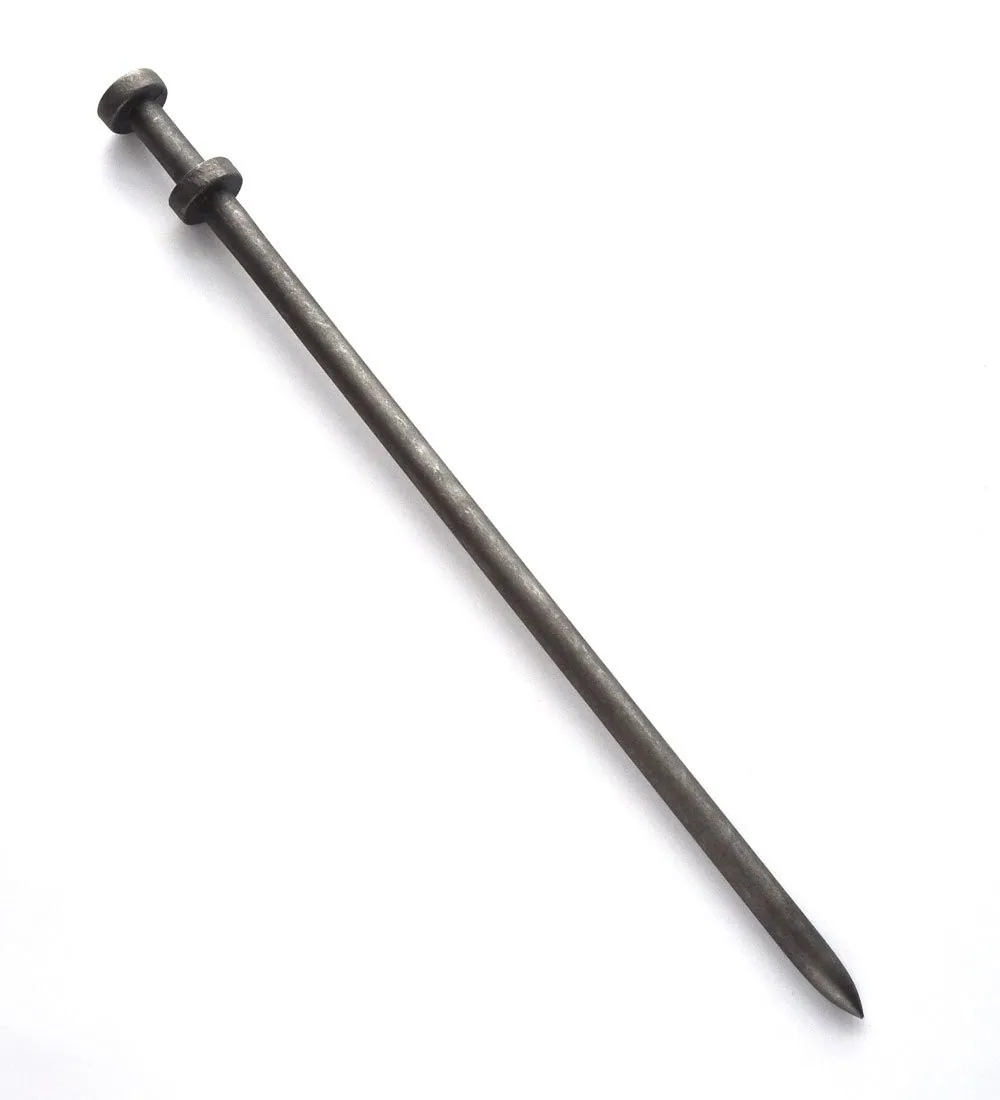
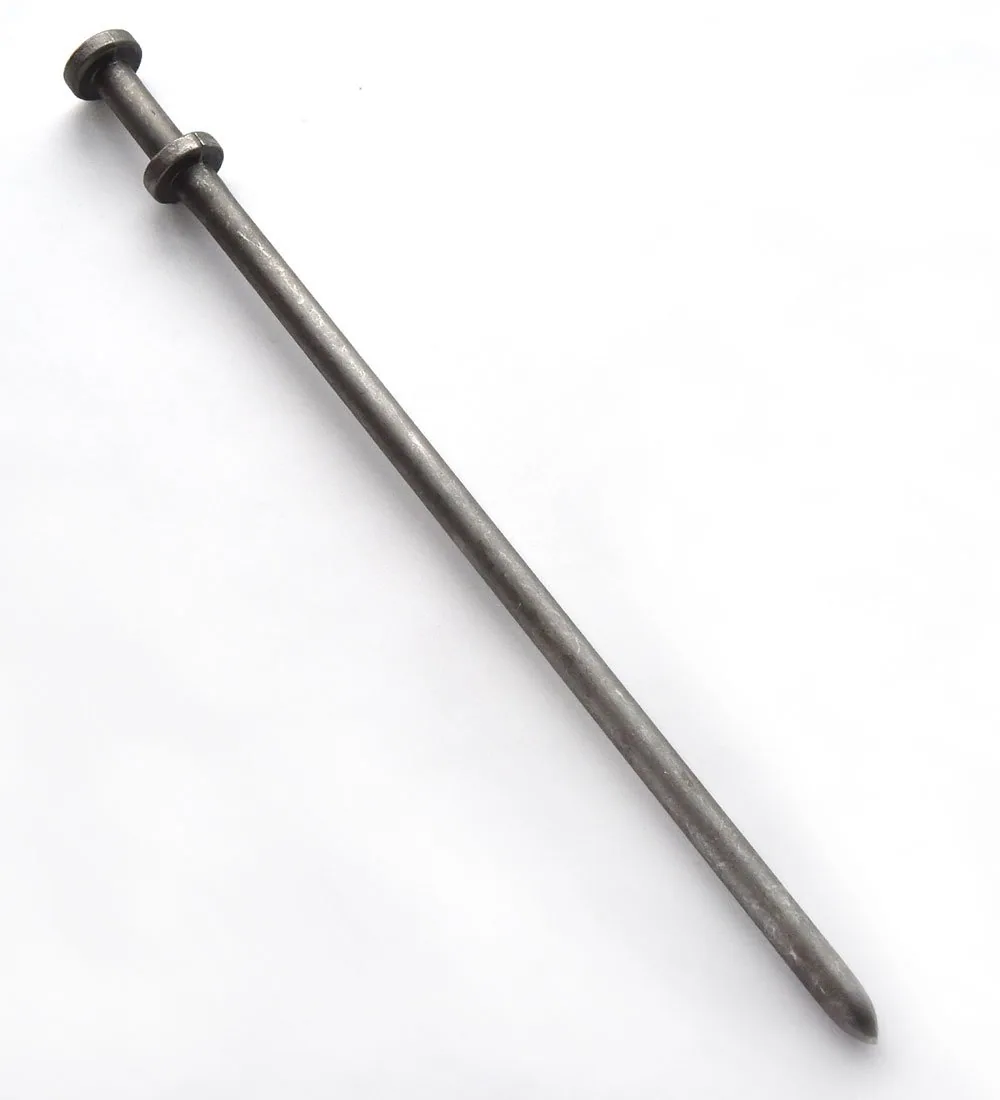
The steel grade matters in both cases. Mild steel will banana in dense-but-penetrable ground before reaching meaningful depth. High alloy steel and the heat drawn point are what allow the stake to penetrate consistently in difficult ground without deflecting on the way in.
Size Guide for Hard-Ground Conditions
| Ground Condition | Recommended Size | Notes |
|---|---|---|
| Firm lawn, loam, managed grass | 30" × 1" or 36" × 1" | Standard conditions — choose by structure type and load |
| Compacted clay (summer), firm estate ground | 36" × 1" or 42" × 1.125" | Move up one size from your standard for this structure type |
| Chalk, flint-bearing, compacted showground | 42" × 1.125" or 48" × 1.125" | Pilot hole technique for chalk; steady driving pace |
| Limestone, boulder clay with cobbles, shallow rock substrate | 30" × 1" or 36" × 1" — gang arrangement | Shorter stakes at achievable depth, linked by spreader bars. A longer stake cannot penetrate past the obstruction. |
| Rock at or near surface (<200mm) | Gang staking or specialist anchor — contact us | Drive stakes not appropriate where rock is at surface depth |
For primary anchor points — main eaves points, ridge poles, high-tension positions — always choose one size above what you would use for secondary positions in the same ground. These are the points that carry the highest structural loads and where a failure has the most consequence.
Use the stake calculator to generate a full stake schedule by structure type, size, and ground condition. If your ground is unusual or the structural specification is demanding, get in touch — we can advise on the specific configuration.
Driving Technique in Hard Ground
The right steel makes the difference, but driving technique in hard ground still matters. These are the adjustments that experienced installers make when conditions are difficult.
Drive Vertically
Stakes should be driven perpendicular to the ground surface. In hard ground, the temptation is to angle the stake toward the load direction — this feels like it would increase resistance to the guy rope pull. It does not. An angled stake loses approximately 23% of its holding power at 30 degrees from vertical compared to a vertical stake at the same depth. More earth is "behind" a vertical stake — between the shaft and the load — than behind an angled one. In hard ground, vertical driving is also often necessary because the surface doesn't allow an angled start at all.
Steady, Consistent Blows — Not Repeated Heavy Ones
In chalk and limestone, repeated heavy blows increase crumbling and worsen the hole around the stake shaft. A steady, firm pace — allowing the point to penetrate and seat cleanly on each blow — produces better results than rapid heavy hammering. The heat drawn point on Tiger Stakes is designed to displace ground cleanly on each blow; the benefit is lost if the hole is being enlarged by excessive impact before the stake has advanced.
Pilot Drilling
In chalk, flint-bearing ground, and any hard substrate where repeated impact causes the material to crumble rather than compact, pilot drilling before driving significantly improves grip and reduces hole enlargement around the shaft.
The method: drill a pilot hole at the stake position, 4–6mm smaller in diameter than the stake shaft. For the 26mm (1") Tiger Stake, that means a 20–22mm pilot hole. For the 29mm (1.125") stake, a 23–25mm hole. Drill to the full intended embedment depth — not just a starter depth — then drive the stake using normal technique.
Because the stake is wider than the pilot hole, it compresses the surrounding material as it drives in rather than displacing it under impact. In chalk, this preserves the grip of the wall around the shaft rather than crumbling it. In flint-bearing ground, it gives the stake a clear path to depth without the tip deflecting on an unseen nodule. The result is better friction along the full shaft length and more predictable holding capacity than impact-only driving in the same ground.
- Use a battery SDS hammer drill with a masonry bit — the hammer action is what matters. A standard rotary drill will not penetrate chalk or compacted ground at a usable pace on site.
- Drill to the full intended stake depth. If the stake stops short after driving, the pilot hole was not deep enough — extract, extend the hole, and re-drive.
- Pilot drilling adds time per stake. Use it at primary and high-load anchor points where holding capacity is most critical, not on every secondary peg position.
Mechanical Percussion Drivers
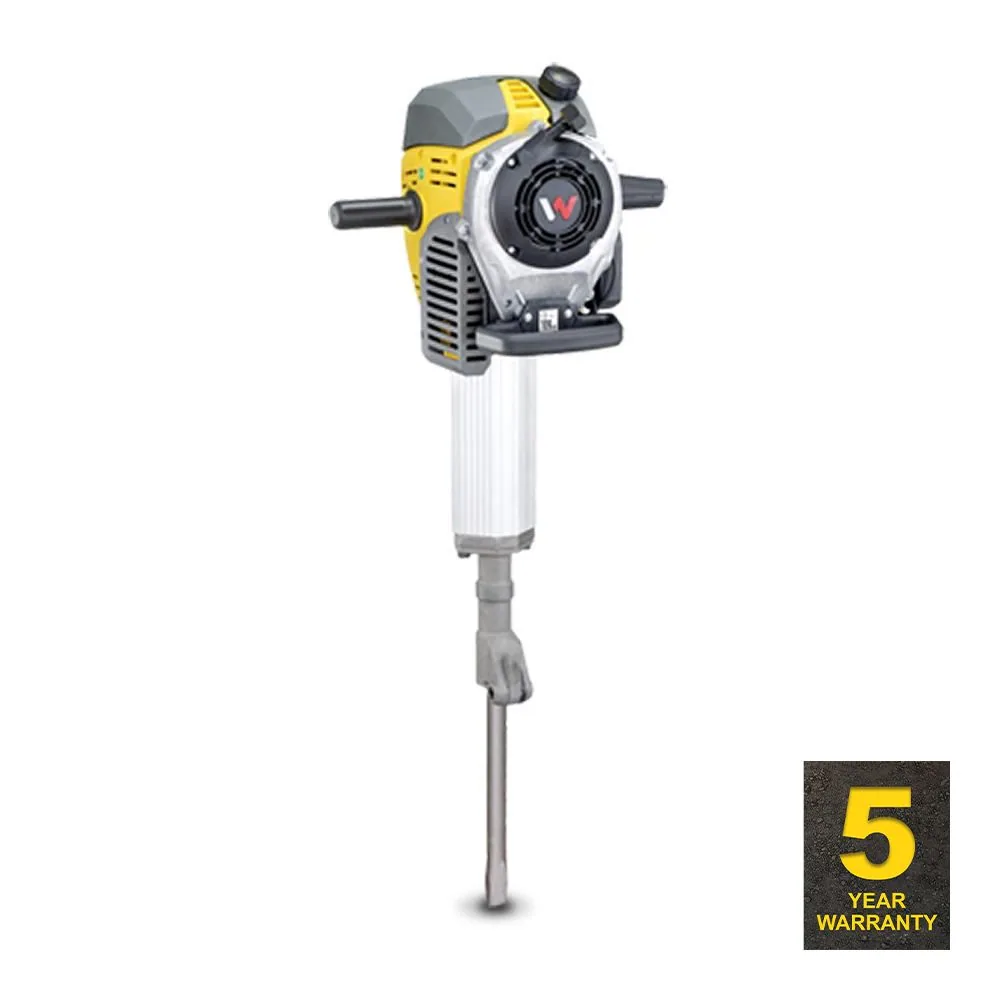
A petrol-driven breaker delivers consistent impact energy per blow regardless of operator fatigue. In hard ground, this matters because lighter or inconsistent hand blows allow the tip to deflect between strikes. The consistent energy profile of a mechanical driver applies the next blow before any deflection can compound. On limestone and compacted showground in particular, a mechanical driver is the difference between a manageable job and a very slow one.
The Wacker BH55 is a petrol percussion breaker adapted for marquee stake driving, used with the stake driving cup that protects the stake head and provides a clean interface between driver and stake. If you are driving stakes regularly in hard ground without a mechanical driver, the time saving across a season is material. For the safe two-person method, see our guide to driving marquee stakes with a powered breaker.
Use a Stake Cap During Driving
Without a driving cup, the stake head deforms under repeated impact — mushrooming at the top, which reduces the effective striking face and causes energy to be lost to the sides rather than transmitted down the shaft. A stake cap preserves the head geometry across a season of hard-ground use. It also leaves a clean surface for the extraction tool to grip cleanly at de-rig.
When One Stake Is Not Enough
Gang staking — two or more stakes linked by a spreader bar and loaded together — is not a workaround for difficult ground. It is the correct engineered response to ground that cannot accept a single full-depth stake, or to anchor points where the specified load exceeds what one stake can provide.
The IFAI data on gang effectiveness: two stakes in a line perpendicular to the load direction provide approximately 1.22 times the holding power of a single stake at full depth. Three stakes in a line give 2.76 times. The key variable is the spacing between stakes — IFAI guidance is that the distance between stakes should be approximately one-third of their embedment depth. Two stakes driven to 600mm should be spaced 200mm apart, linked by a bar that transfers load evenly between them.
In hard ground where reaching full depth is not possible, two stakes at 60% embedment in a gang arrangement will often outperform one stake at 60% embedment — and may meet a load specification that a single stake cannot. This is the situation to reach for gang staking rather than assuming the job cannot be done.
We stock galvanised spreader bars in various configurations. For a full breakdown of gang staking arrangements and effectiveness factors, see the gang staking and spreader bars guide. For specific load distribution requirements at demanding venues, get in touch with the site conditions and structural specification — we can recommend the right arrangement.
Testing Ground Conditions Before You Commit
Ground conditions can vary significantly within a single site — between the car park, the lawn, and the kitchen garden — and can change substantially between a recce visit and the installation day. A simple field test before finalising your staking plan takes five minutes and can prevent an expensive rethink on the day.
Ask Before You Travel
The cheapest hard-ground survey is a phone call. Venues usually know what is under their grass, and event offices at showgrounds, racecourses and estates often remember what the last marquee contractor found. Worth asking: has a structure been staked in this position before, and how did it go; is any of the area built over old hardstanding, a filled trench or a former car park; roughly how deep is the topsoil; and has trackway, hardcore or a service run been laid anywhere in the footprint. None of that replaces a test on the day. What it does is tell you whether to load the SDS drill, the pilot bits and the breaker before you leave the yard, rather than sending someone back for them while the crew stands waiting.
The Penetration Test
Drive a stake with a standard sledgehammer using a normal swing and measure how far it advances per blow. This is the IFAI-derived field methodology — no specialist equipment needed, just a tape measure.
| Penetration per blow | Ground classification | Implication |
|---|---|---|
| Less than 5mm | Hard / very dense | Longer stakes, mechanical driver, consider gang staking |
| 5–12mm | Stiff / medium-dense | Standard to firm-ground stake selection; check embedment |
| 12–25mm | Medium | Standard conditions; routine selection applies |
| More than 25mm | Soft / loose | Longer stakes, spreader arrangements; consider pull testing |
Test at several points across the staking area — particularly at primary anchor positions and any location that looks or feels different from the surrounding ground. Hard spots and soft spots can sit adjacent to one another without any surface indication.
Pull Testing
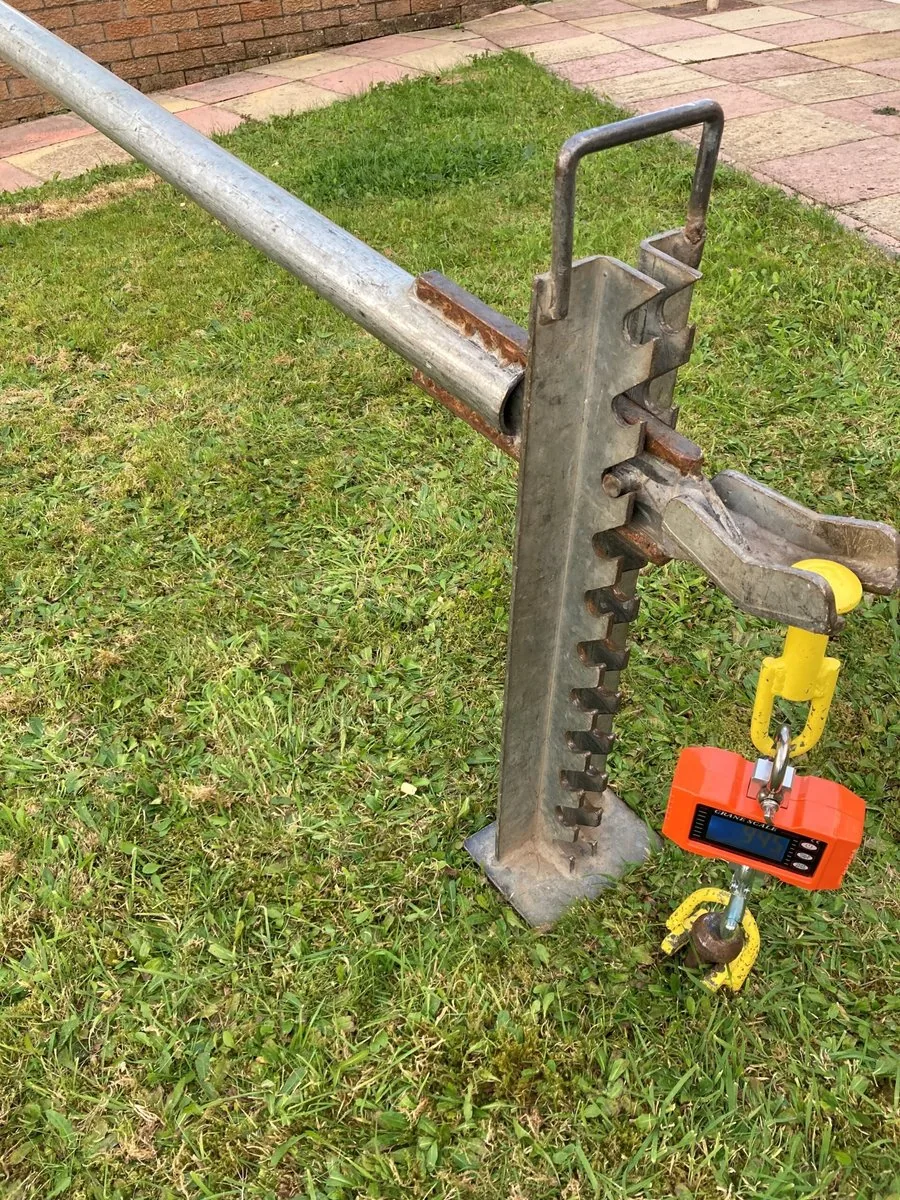
Where a structural specification includes minimum pullout loads per anchor point — common on clearspan marquees and larger structures — the only way to verify compliance is to test the installed stake under load. The pull test indicator applies a measured extraction force and records the result, giving you on-site verification of anchor capacity before the structure goes up.
MUTA's Best Practice Guide recommends pull testing as part of installation practice at sites where ground conditions are uncertain or where previous installations have shown variable results. In hard ground, pull testing also reveals cases where a stake that appeared fully driven has in fact seated at an angle or hit a sub-surface obstacle — both of which reduce holding capacity relative to embedment depth.
For a step-by-step guide to conducting pull tests, see how to conduct a pull test.
Cable Avoidance
MUTA's 2026 Best Practice Guide makes cable avoidance a formal requirement before any ground penetration at venues where underground services are unknown. At estate and heritage venues in particular — where services may be old, poorly documented, or unmarked — a CAT scan before ground penetration is a professional expectation — see our guide to cable avoidance and scanning for buried services. This applies in hard ground conditions as much as any other: a ground probe hitting a buried cable in compacted aggregate is the same safety risk as in soft ground.
A Straight Conversation About Your Ground
Hard ground is one of the most common reasons hire companies get in touch with us, and one where the right advice before the job is worth more than troubleshooting on the day. If you have a specific venue, ground type, or structural specification you're working to, we're happy to talk it through.
No hard sell — just a straight conversation about what you're dealing with and whether we can help.
Email: hoganuk [at] hoganstakes.co.uk
Contact form: hoganstakes.co.uk/contact
Product range: hoganstakes.co.uk/products
Hogan Stakes UK is the sole authorised UK distributor of stakes manufactured by Hogan Tent Stakes, producers of premium tent and marquee stakes in the USA since 1948.
This guide is intended for professional reference. For structural engineering applications with specified minimum holding loads, please consult a qualified structural engineer for your specific installation requirements.
Common Questions
What is the difference between tent pegs for hard ground and standard marquee stakes?
Standard marquee stakes are made from mild steel and perform adequately in softer ground. For hard ground — limestone, chalk, compacted clay, showground aggregate — the difference is the steel grade and tip design. High alloy steel resists deformation under repeated impact, so the tip stays true and the stake tracks straight. A mild steel stake in hard ground bends progressively from the first blow, compounding with each successive drive.
Which Tiger Stake size is best for hard ground?
It depends on the type of hard ground. For compacted clay, aggregate, or firm chalk — ground that is hard but still penetrable — the 42" × 1.125" (1070mm) or 48" × 1.125" (1219mm) gives a useful depth margin, and the larger 29mm diameter adds roughly 10% more holding capacity at the same embedment. For limestone or any ground with rock or obstruction at shallow depth, longer stakes are not the answer — use 30" × 1" or 36" × 1" stakes in a gang arrangement, linked by spreader bars. A longer stake cannot penetrate past an obstruction regardless of its length.
Do I need a mechanical driver for hard ground?
Not always, but a mechanical percussion driver makes a significant difference. A petrol-driven breaker like the Wacker BH55 delivers consistent impact energy per blow. In hand-driving, inconsistent blows allow tip deflection between strikes. The consistent energy profile of a mechanical driver applies the next blow before deflection can compound — in limestone and compacted showground, that is the difference between a workable installation and a very slow one.
What is banana-ing and how do I prevent it?
Banana-ing is progressive tip deflection: a mild steel tip deforms slightly on the first blow, and each subsequent blow drives the stake further along the curve already established. Prevention starts with the steel — a heat drawn high alloy point resists the initial deformation. Beyond that: drive vertically and steadily rather than with repeated heavy blows, and use a stake driving cup to maintain a clean striking surface.
Can I use gang staking instead of a longer stake in hard ground?
Yes, and in some situations it is the right approach. Where ground is so hard that reaching full depth is impractical, two shorter stakes in a gang arrangement linked by a spreader bar can provide more holding power than one longer stake at partial embedment. IFAI data shows two stakes in a gang give approximately 1.22 times the holding power of a single full-depth stake; three in a line give 2.76 times. Gang staking is the correct engineered response to ground that cannot accept a single full-depth stake.
How do I assess whether ground is hard before a job?
Drive a test stake and measure penetration per blow with a standard sledgehammer. Less than 5mm per blow indicates hard ground: the problem is penetration, not holding, so pilot-drill or drive mechanically rather than changing stake length. More than 25mm per blow indicates soft ground, where holding power becomes the constraint and a longer stake or a gang arrangement earns its place. Test at several points across the staking area, particularly at primary anchor positions.
Products for hard ground applications
Fighting hard ground with pegs that bend?
High alloy steel Tiger stakes with a heat-drawn point hold their line in compacted and stony ground. We'll help you match size to the site.