Gang Staking and Spreader Bars: Load Distribution for Poor Ground
A single stake can only do so much. When the ground cannot provide the holding power an anchor position needs, spreading the load across two or more stakes is the practical answer.
Why Single Stakes Fail in Poor Ground
The holding power of a driven stake depends on the frictional resistance of the soil against the stake shaft and tip. In dense, compacted ground, that friction is substantial — a well-driven 42" high alloy stake in stiff-to-hard ground can resist upward pull forces of several hundred kilograms. In soft, wet, or loose ground, that same stake may resist only a fraction of that.
The IFAI soil consistency table gives indicative pull-out capacity per stake across soil classifications:
| Soil classification | Indicative capacity (single stake) |
|---|---|
| Hard (Very Dense) | ~1,134 kg |
| Very Stiff (Dense) | ~726 kg |
| Stiff (Medium Dense) | ~363 kg |
| Medium | ~181 kg |
| Soft (Loose) | ~91 kg |
| Very Soft (Very Loose) | ~45 kg |
Source: IFAI Tent Rental Division — Pullout Capacity of Tent Stakes. Figures are indicative baselines; actual values vary with stake diameter, depth, and driving technique.
A single stake in very soft ground — waterlogged showground, saturated riverside turf, loose sandy soil — may provide only 45 kg of pull-out resistance. A loaded guy rope on a sailcloth main ridge anchor in moderate wind can exert several times that. The stake does not fail dramatically; it simply creeps upward as the load exceeds what the soil can hold, and the structure loses tension, shape, and eventually stability.
Gang staking is the response to this situation: using more than one stake per anchor point, connected through a spreader bar, so the load is shared across a greater area of soil contact.
How a Spreader Bar Works
A spreader bar is a rigid bar with multiple stake holes and a central attachment point for the guy rope, ratchet strap, or anchor connection. Stakes are driven through the holes in the bar at spaced intervals — typically 300–450mm apart — and the guy rope attaches to the central point on the bar rather than directly to a single stake.
The load applied by the guy rope is distributed across all the stakes connected through the bar. Each stake carries a share of the total load, with the distribution depending on the angle of pull, the ground conditions, and the position of each stake in the bar.
The stakes in a spreader bar arrangement are driven at offset positions, not at the same point in the ground. The soil disturbance from one stake does not directly undermine the adjacent stake's friction — the spacing preserves most of the holding capacity of each individual anchor, while combining their resistance at the shared attachment point.
Two Stakes, Three Stakes, More
The number of stakes per spreader bar depends on the load requirement and the ground conditions:
| Configuration | Typical application |
|---|---|
| 2 stakes | Standard gang staking for soft to medium ground; corner and eave positions on pole marquees in poorer conditions; inflatable anchor compliance where a single stake falls below 163 kg |
| 3 stakes | Higher-load positions in soft ground; main ridge anchors on large sailcloth tents; moderately exposed sites where additional margin is warranted |
| 5 stakes | Very soft or waterlogged ground; high-load positions where engineering specifications require substantial pull-out resistance |
| 6 stakes | Anchor Industries standard for wide-span sailcloth tent main ridge positions in hard ground (Aurora 59' installation specification); used where the load per anchor is high and a larger stake bar is in use |
More stakes per bar is not always better — it adds setup time and kit, and in good ground a two-stake arrangement will provide more than adequate holding power. The decision should be driven by what the ground can actually provide, which is where pull testing makes the judgement concrete rather than estimated.
Structure-Specific Applications
Sailcloth tents — main ridge anchor positions
Sailcloth tents concentrate their highest anchor loads at the main ridge positions — the points where the primary ridge guy ropes attach, typically at 20ft intervals along the tent's length. These positions carry a large proportion of the structure's overall canvas and wind loading and are the highest-priority positions for gang staking on any site where ground conditions are not firmly classified as stiff to hard.
The Anchor Industries installation specification for their Aurora 59' sailcloth tent — a widely referenced design in the UK sailcloth hire market — calls for six stakes per 4-foot stake bar at main ridge positions, using 42" × 1.125" stakes, as the baseline configuration for hard ground. This is a useful reference point for understanding the scale of anchoring that wide-span sailcloth structures require at their highest-load positions.
Intermediary positions — the web guy anchors at 10ft intervals between main ridge positions — are typically single stakes in standard ground conditions. Sidewall and skirt stakes are typically single. The gang staking effort is concentrated where the load is.
Clearspan structures — baseplate staking
Clearspan and frame marquee baseplates typically have multiple stake holes, accepting two or more stakes per leg or per hole. This is the clearspan equivalent of gang staking — multiple stakes per baseplate distribute the lateral and uplift loads across more contact area in the ground.
Standard staking on a clearspan uses two stakes per leg. In softer ground, or where structural engineers specify higher holding loads, all available baseplate holes should be used — which typically means three or more stakes per leg. In storm conditions or exposed sites, additional top-of-leg anchor points may also be specified.
The geometry of clearspan anchoring is different from guy rope anchors — the primary forces at the baseplate are lateral racking forces and uplift, rather than the axial pull that a guy rope applies. Stake length matters here as much as count — in soft ground, a longer stake reaches soil at greater depth where conditions are more consistent, and provides greater lateral resistance against the racking force.
Stretch tents — perimeter anchor positions
Stretch tents load their perimeter anchors continuously under high tension — the shape of the structure depends on consistent tension at every point. A weak anchor at any position redistributes load onto adjacent anchors and distorts the profile. Main perimeter positions on larger stretch tents typically carry 3 stakes per spreader bar arrangement as a baseline, escalating with ground conditions.
Gazebos and smaller structures
Corner positions on gazebo-type structures are the highest-load points on a smaller canopy. In soft or waterlogged ground, a two-stake gang arrangement at the corner anchors — the primary guy line positions — gives more predictable holding than a single stake and is worthwhile on any setup in questionable ground conditions.
Confirming Holding Power
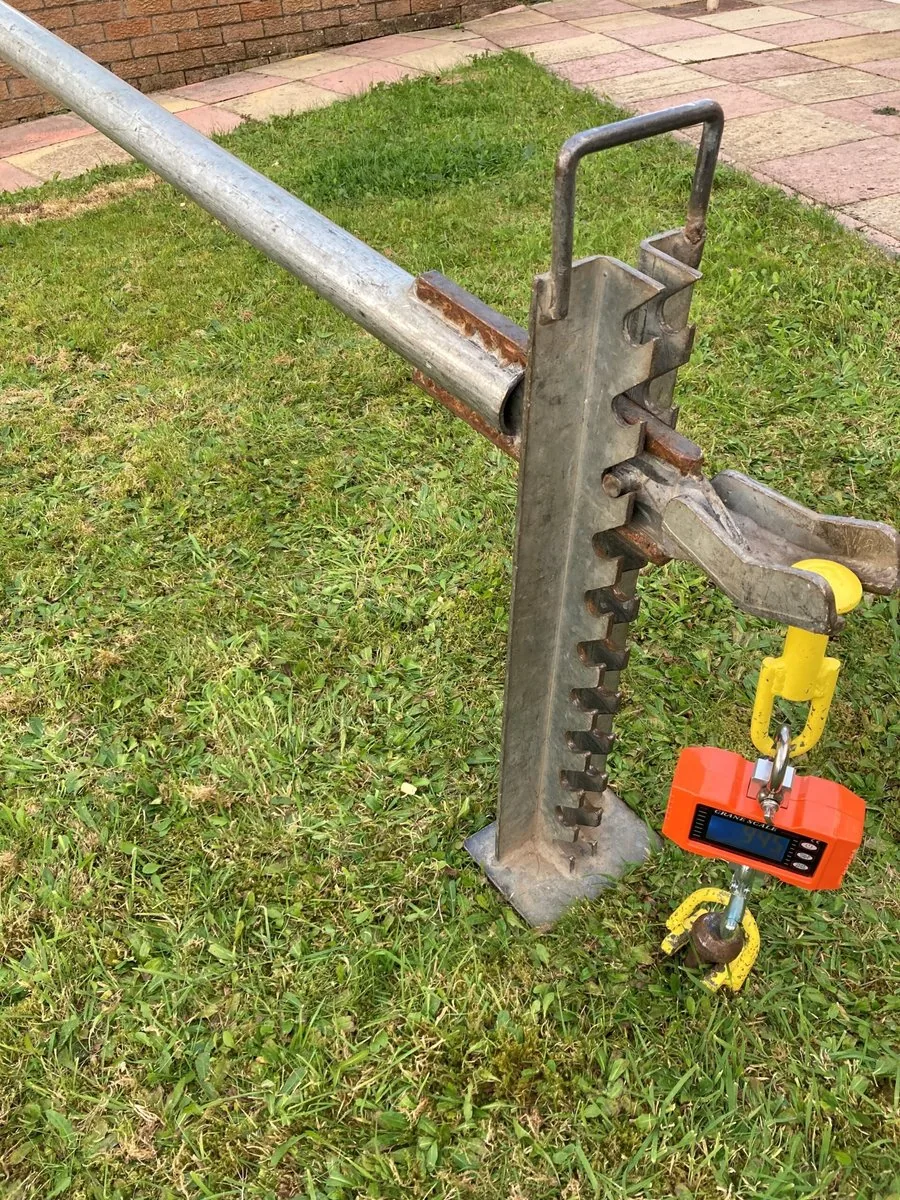
Gang staking improves holding power, but the actual holding power of any arrangement in your ground conditions can only be confirmed by measurement. A pull test on the completed gang staking arrangement gives you a measured figure for what that anchor point is actually providing, which is more useful than an estimate based on the soil classification alone.
Where a structural engineer has specified minimum pull-out loads for a clearspan or large span installation, pull testing the gang staking arrangement is the way to demonstrate that the specified holding power has been achieved. An estimate based on stake count and soil type is not adequate where engineered minimum loads apply.
Practical Notes
Stake spacing in the bar
Stakes driven through a spreader bar should be at adequate spacing to avoid the soil disturbance zones of adjacent stakes overlapping significantly. Standard 4-foot stake bars achieve this with reasonable spacing between holes. Driving stakes through a bar in very close proximity is counterproductive — you are effectively disturbing the same patch of soil with both stakes rather than engaging independent soil columns.
Consistent driving depth
All stakes in a gang arrangement should be driven to the same depth. An uneven arrangement — one stake driven to 300mm, another to 500mm — will not share the load as designed. The deeper stake will carry proportionally more load, which partially defeats the purpose of the multi-stake arrangement.
Inspect the bar, not just the stakes
A gang arrangement is a load path and the bar is part of it, so it is worth thirty seconds before the stakes go through. Are the holes still round, or have they elongated over previous jobs? Is the bar straight along its length? Is the central attachment point free of cracking or wear where the rope or strap seats? An elongated hole lets a stake sit at an angle it was not driven at, which quietly puts back the off-axis loading the arrangement exists to remove. A bent bar shares the load unevenly for the same reason uneven driving depth does. Bars are cheap set against the structure standing on them, so retire a worn one rather than getting one more season out of it.
Stake quality matters more, not less
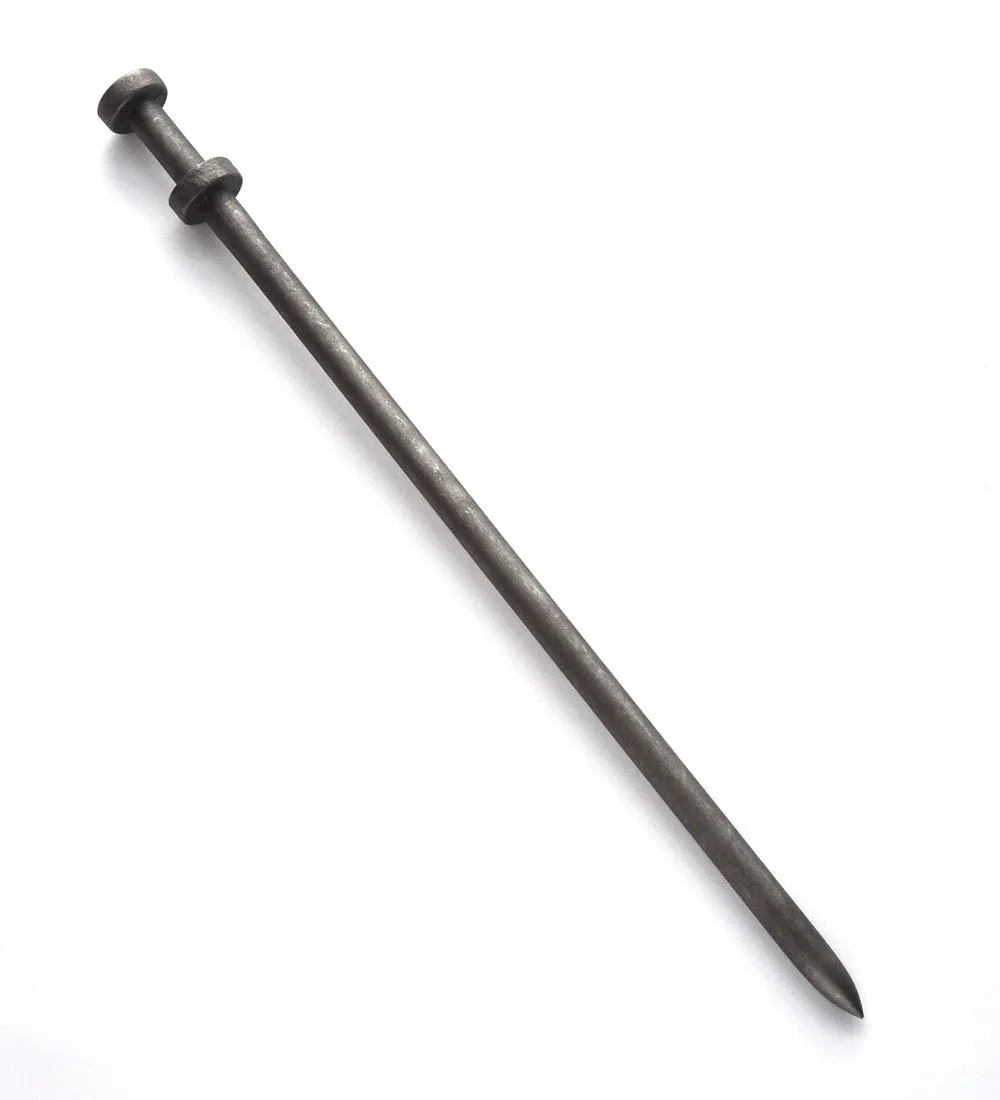
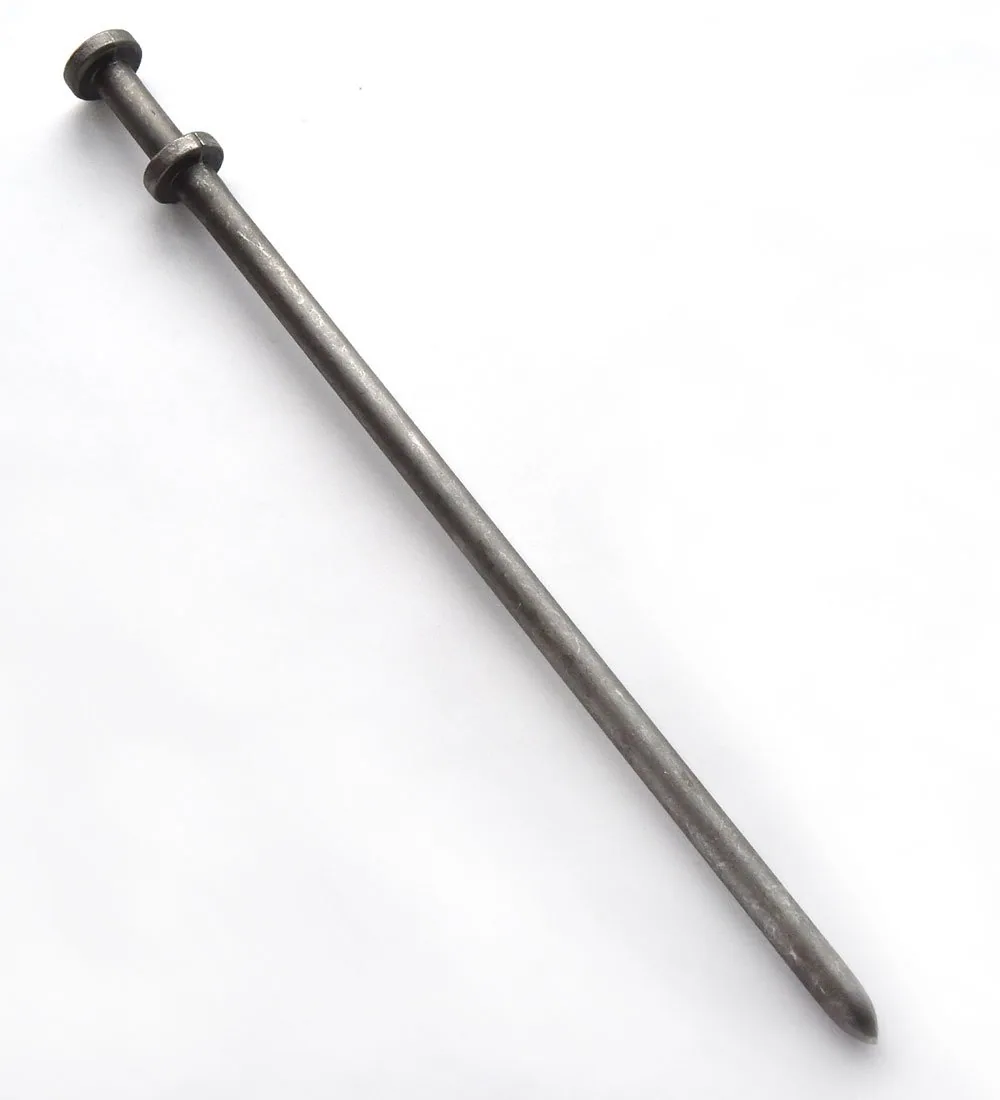
Soft ground is hard on stakes. A stake that deflects off line in the ground does not sit straight, which affects how the load transfers from the bar to the soil. In ground where gang staking is needed, the tip integrity of each stake matters — a stake with a deformed tip will drive erratically and may not seat correctly in the bar hole. High alloy steel stakes with a heat drawn point maintain tip geometry across repeated drives and extractions, which is directly relevant in the conditions where you're most likely to be gang staking.
Hogan Stakes UK is the sole authorised UK distributor of stakes manufactured by Hogan Tent Stakes, producers of premium tent and marquee stakes in the USA since 1948.
This guide is intended for professional reference. For installations with structural engineer specifications and minimum holding loads, consult a qualified structural engineer for your specific installation requirements.
Common Questions
What is gang staking?
Gang staking is the practice of connecting two or more stakes to a single anchor point through a spreader bar or ratchet plate, so that the load from a guy rope, baseplate, or tensioned cable is distributed across multiple stakes rather than being borne by one. It is the standard approach when a single stake cannot provide sufficient holding power for a given anchor position.
When should I use a spreader bar?
Spreader bars are used when ground conditions reduce single-stake holding power below the load requirement, when engineering specifications call for higher pull-out resistance than a single stake can provide, in sand or loose ground where a single stake has limited lateral resistance, and at high-load positions on wide-span or storm-exposed structures.
How many stakes per spreader bar?
Two stakes per spreader bar is the most common configuration and the standard for soft-ground gang staking. Three or more stakes per bar is used for heavy-load positions, engineered specifications, or where pull testing shows that a two-stake arrangement does not meet the required holding load. The Anchor Industries Aurora installation guide specifies six stakes per stake bar at main ridge positions for wide-span sailcloth tents in hard ground.
Does gang staking double the holding power?
Not exactly, and this is an important distinction. A two-stake gang arrangement through a spreader bar provides more holding power than a single stake, but not precisely double — soil disturbance between adjacent stakes means the combined resistance is somewhat less than two independent stakes would provide. The practical uplift is significant and well worth the additional stake, but it should not be assumed to be a simple multiplier. Pull testing confirms the actual holding power of the arrangement in your ground conditions.
Products referenced in this guide
Spreading load across multiple stakes?
Spreader bars and stake plates distribute pull-out load for high-tension and soft-ground positions. Tell us the arrangement and we'll help.