How to Conduct a Pull Test on a Ground Anchor
Staking patterns, stake specifications, and ground conditions are all estimates until you measure what's actually happening at each anchor point. Pull testing turns that estimate into a number.
What Pull Testing Is — and What It Tells You
A pull test measures the axial pull-out resistance of a driven ground anchor — the force required to begin extracting the stake from the soil under controlled conditions. The result is a figure in kilograms that tells you how much holding power that specific anchor point has, in that specific ground, at that depth, on that day.
Ground conditions are rarely what they look like from the surface. A patch of ground that appears firm can be waterlogged at depth. A venue that dried out during setup may soften overnight. Compacted show-ground from three days ago can perform differently from the area twenty metres away. A pull test removes the guesswork from the anchor points that matter most.
Where structural engineers specify minimum pull-out loads — common on larger or longer-term installations — a measured figure is the only thing that satisfies the requirement. An estimate based on visual ground assessment is not an adequate substitute where accountability is required.
When Pull Testing Is Required
There is no universal legal requirement for pull testing on all temporary structure installations in the UK. Whether it is required — or simply good practice — depends on the installation:
- Structural engineer sign-off: Engineers specifying anchorage for larger clearspan structures, long-span sailcloth marquees, or semi-permanent installations routinely specify minimum pull-out loads that must be verified by test.
- EN 14960 inflatable anchors: The standard requires that each anchor point achieves a minimum 163 kg holding force. Compliance is demonstrated by test, not by specification alone. PIPA inspectors can request evidence of this on inspection.
- Risk management and insurance: Some insurers covering public events ask whether staking has been independently verified. A pull test record — date, location, anchor position, measured figure — is a clear and transparent entry in the event risk file.
- Challenging ground: Any installation where ground conditions are uncertain, variable, or known to be poor. If you're working in saturated ground, reclaimed land, artificial turf over compacted aggregate, or any site where your assessment of the soil is uncertain, pull testing a sample stake to establish actual ground holding force before deciding on anchorage configuration is sound practice.
For routine installations on familiar ground in good conditions, experienced operators rely on knowledge of the site and consistent stake specification. Pull testing is the escalation from experience to evidence.
Equipment
The equipment required for a site pull test is straightforward:
- A stake extraction tool — the rated hook or bar through which the extraction force is applied. For professional marquee stakes, this is typically a heavy-duty extraction bar with a hooked head designed to seat under the stake head.
- A pull test indicator — the load cell that sits inline in the load path between the extraction tool and the stake. Digital display, calibrated in kilograms, with a HOLD function that captures peak force before the stake begins to move.
The indicator connects inline — it becomes part of the extraction process. You are not running a separate test in addition to stake removal; the test reading is captured as part of the normal extraction stroke.
Method: Step by Step
Step 1 — Drive the stake correctly
Pull testing a poorly driven stake gives you a figure for a poorly driven stake. For the test to be meaningful, the stake should be driven to full working depth, at the correct angle for the anchor position. For guy line stakes, drive close to vertical — leaning no more than about 10° away from the pull, never toward it. For baseplate and vertical anchor applications, perpendicular to the ground. A stake driven at an irregular angle gives an irregular result, so keep the driving technique consistent.
Step 2 — Attach the indicator inline
Connect the pull test indicator inline between the extraction tool and the stake head. The indicator sits in the load path — force passes through it on the way from your applied effort to the stake. Check the indicator is reading zero (or tare it) before applying load.
Step 3 — Apply steady, controlled force
Apply steady upward force along the axis of the stake. Smooth and controlled — not a jerk, not a sudden shock. You are loading the anchor progressively until the soil resistance is overcome and the stake begins to move. The peak force reached before that point of movement is the pull-out resistance.
Shock loading — a sudden impact or jerk — will give you a higher reading than the actual static resistance. The number you want is the sustained peak load under steady pull.
Step 4 — Read the peak figure
The HOLD function on the indicator captures the maximum force reading before the stake begins to move. Once the stake starts to shift, resistance typically drops — the HOLD function preserves the peak so you can read it clearly after the extraction stroke is complete. Note the figure in kilograms.
Step 5 — Record the result
Record the reading with enough context to be useful later: the measured figure, the anchor position (e.g. north ridge main #3), the stake specification (size, material), a brief note on ground conditions at that position, and the date. This becomes a clear and transparent entry in your build log.
Interpreting the Results
A pull test result needs to be read against two reference points: the structural requirement for the installation, and the expected performance range for ground conditions of that type.
The IFAI-derived soil consistency table is the standard reference used across the tent and marquee industry. It characterises soil resistance by penetration depth per blow using a standard probe, and gives indicative pull-out capacity per stake:
| Soil classification | Probe penetration per blow | Indicative pull-out capacity |
|---|---|---|
| Hard (Very Dense) | <5mm per blow | ~1,134 kg |
| Very Stiff (Dense) | 5–13mm per blow | ~726 kg |
| Stiff (Medium Dense) | 13–38mm per blow | ~363 kg |
| Medium | 38–76mm per blow | ~181 kg |
| Soft (Loose) | 76–152mm per blow | ~91 kg |
| Very Soft (Very Loose) | >152mm per blow | ~45 kg |
Source: IFAI Tent Rental Division — Pullout Capacity of Tent Stakes. Figures are indicative baselines for a standard stake specification in each soil class; actual measured values will vary with stake diameter, depth, and driving technique.
A result that is significantly lower than the table value for the apparent soil class is worth understanding. It might indicate the stake is short for the ground conditions, that the soil at depth is softer than the surface suggests, or that the anchor position has been disturbed — by vehicle movement, repeated installation, or water infiltration.
A result below the structural requirement for that anchor point requires action — whether that is moving to a gang staking arrangement, using a longer stake, or, where the ground simply cannot provide the holding power needed, relocating the anchor position.
Record Keeping
A pull test that is not recorded is half a pull test. The value of the measurement is partly in what you do with it on the day, and partly in the record that survives the installation.
A useful build log entry for each tested anchor point includes:
- Date and time of test
- Anchor position reference (e.g. a numbered layout plan or simple site notation)
- Stake specification: size, diameter, material
- Measured pull-out resistance in kilograms
- Brief ground condition note (e.g. "firm surface, softer at depth — 220mm penetration first blow", "compacted limestone sub-base")
- Any action taken where the result was below threshold
This level of record keeping takes minutes per anchor point and provides a clear, transparent basis for the structure sign-off. If a structural engineer has specified the anchorage, the test records are what demonstrate compliance.
For event risk files and insurance purposes, a dated log of tested anchor points and measured figures — showing where results were below threshold and what corrective action was taken — is a more robust record than a general statement that staking was completed to industry practice.
Practical Notes
Test to determine ground holding force — before calculating anchorage
Drive a test stake to working depth at a representative point on site and measure the pull-out resistance. That figure is the ground's actual holding force — the input you need to calculate the required anchorage arrangement. If the ground holds 250 kg per stake and your specified load at that anchor point is 1,000 kg, a single stake is well short — but four stakes in a gang won't simply add up to 1,000 kg either, because adjacent stakes share disturbed soil. Size the gang with margin above the simple sum, or move to a different stake specification, and pull test the finished arrangement to confirm it holds. Test the ground first, calculate the anchorage, then drive the installation.
Test critical positions first
If you're not testing every anchor point, prioritise the positions carrying the highest load — main ridge anchors on sailcloth tents, corner and eave stakes on pole marquees, baseplate positions on clearspan structures, and any anchor point in an area of the site where ground conditions look different from the rest. A representative sample of tested positions across the site is more useful than testing a cluster in one corner.
Ground conditions change
A pull test is a measurement at a point in time. Ground that holds well on a dry Thursday can change character by Saturday morning after overnight rain. For multi-day events in variable weather, it is worth repeating spot checks at key anchor positions if significant rainfall has occurred between setup and the main event load.
Re-driving affects the result
A stake that has been extracted and re-driven at the same point will give a lower pull-out resistance than the initial drive — the soil around the point has been disturbed and has not had time to re-consolidate. If you extract a stake for testing and then re-drive it to work, account for this when reading the result; the working resistance of the re-driven stake will typically be higher than the test reading once the soil has had time to settle around it.
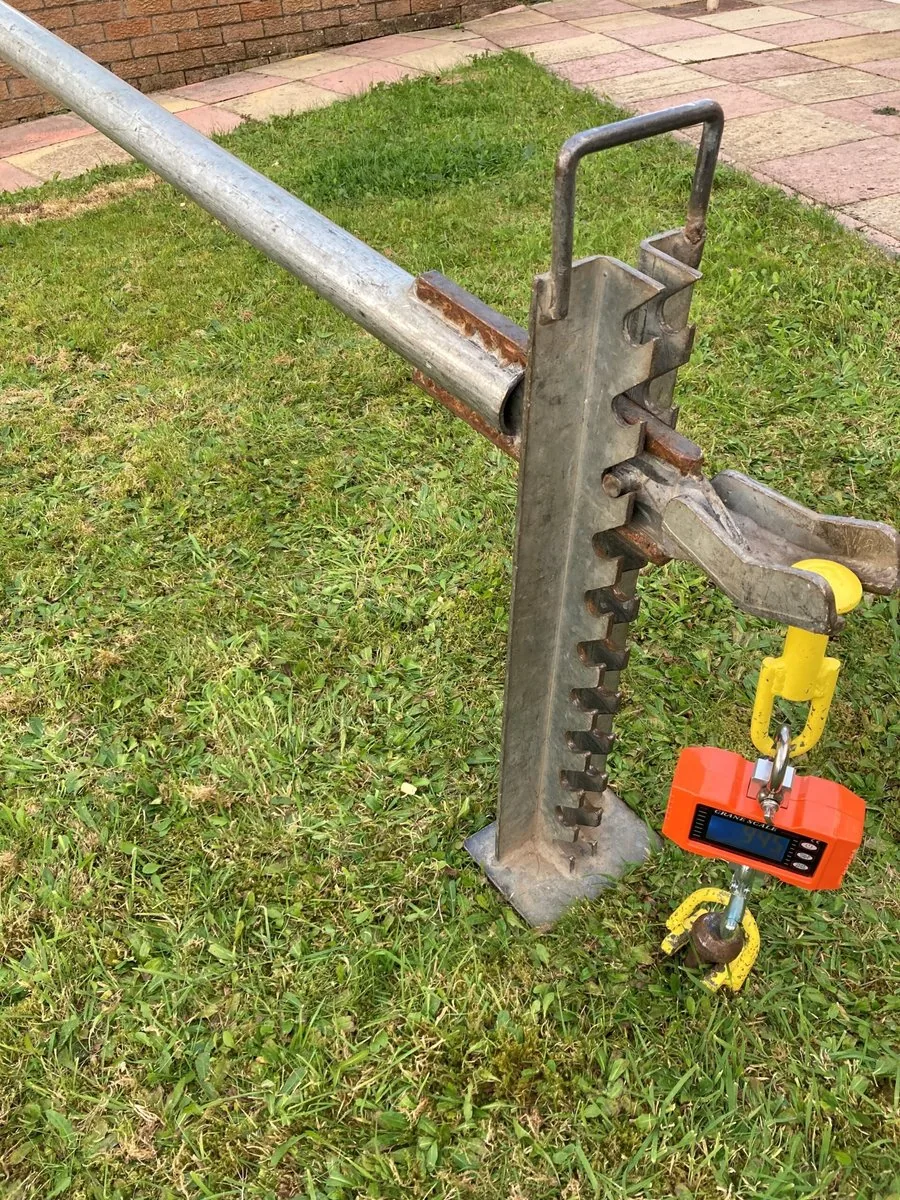
Pull Test Indicator
Digital display in kilograms. Wireless HOLD remote — freeze the peak reading for photography. CE marked. Connects inline with the stake extraction tool so the extraction stroke gives you a load reading at every anchor position.
Hogan Stakes UK is the sole authorised UK distributor of stakes manufactured by Hogan Tent Stakes, producers of premium tent and marquee stakes in the USA since 1948.
This guide is intended for professional reference. For installations with specified minimum holding loads, consult a qualified structural engineer for your specific installation requirements.
Common Questions
How often should pull tests be carried out on marquee anchors?
There is no fixed legal requirement for pull testing frequency on all UK temporary structure installations. MUTA recommends pull testing as part of good practice, particularly at new or unfamiliar venues, after any ground disturbance, or when ground conditions are uncertain. Many operators test a sample of anchors on each build as standard. Where a structural engineer or event safety plan requires it, testing requirements will be specified explicitly.
What equipment is needed for a site pull test?
You need a pull test indicator (a load cell or mechanical peak-hold gauge rated to at least 300–500 kg), a connection to the stake head — typically a chain or D-shackle — and an extraction tool or fulcrum bar to apply steady upward force. The indicator sits inline in the load path between the stake and your applied force. Hogan Stakes UK stocks the TL-200 mechanical pull test indicator.
What pull-out resistance should a marquee stake achieve to pass?
The pass threshold depends on the load at the specific anchor point, not a single universal figure. As a general reference, the MUTA Best Practice Guide states a minimum pull-out resistance figure for standard UK marquee staking. Where a structural engineer has specified higher requirements, that figure takes precedence. If a stake does not meet the threshold, it should be re-driven, upgraded in size, or supplemented with gang staking.
Can I use my existing extraction tool for pull testing?
You can use an extraction tool to apply the upward force, but you still need a separate pull test indicator inline between the tool and the stake to measure the load. The extraction tool provides the mechanical advantage to lift the stake; the indicator captures the peak load before movement. Without the indicator, you have no objective reading to record or report.
What happens if a stake fails the pull test?
A failed test means the anchor point doesn't yet hold what the structure needs — it doesn't mean the stake is wrong. Re-seat to full depth, add a second stake in gang with a spreader bar, or step up a size where the ground allows it. Re-test after any change; never open on an anchor point that hasn't passed.
Does wet ground affect a pull test result?
Yes — wet or waterlogged ground holds less per metre of embedment, so a stake that would pass in firm ground can fall short after rain. Test on the day you're relying on the result, not before a forecast change, and re-test if conditions shift.
Verifying your anchors on site?
The pull test indicator measures actual holding force in kilograms — CE marked, wireless remote, and it works inline with the extraction tool.