How to Drive Tent and Marquee Stakes with a Powered Breaker — the Safe Two-Person Method
A powered breaker drives marquee stakes far faster than hand-driving across a busy season — but only when two people work to a clear method and treat the machine with respect. This guide covers the safe two-person technique, the driving angle that holds, and the checks that come before the first blow.
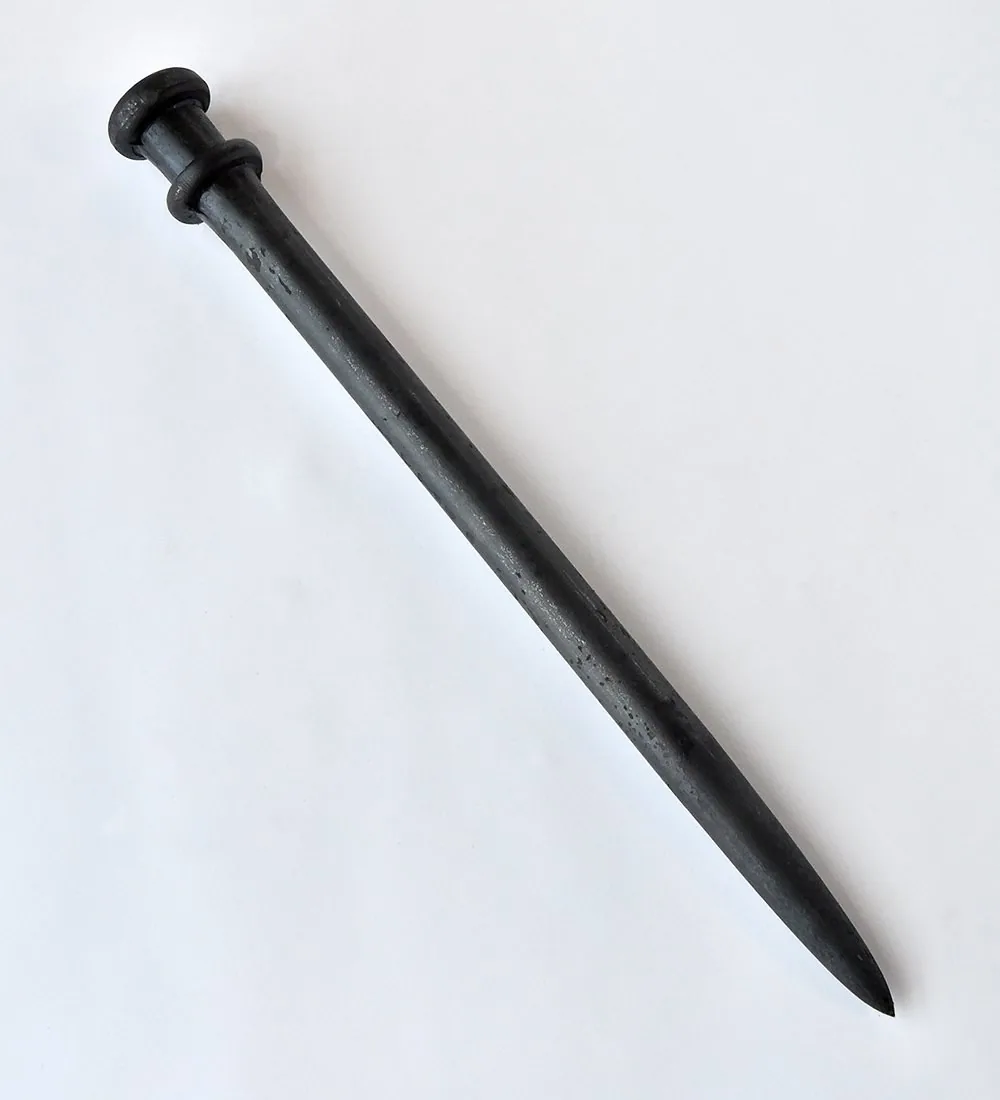
Demonstration of the two-person powered-driving method, driving double-headed stakes — the same pattern as our double-headed Tiger Stakes. The driver and cup Hogan supplies for this are the Wacker BH55 petrol breaker and a marquee stake driving cup. (Demonstration source: Celina Tent.)
Contents
The Two-Person Method — Holder and Operator
Driving stakes with a powered breaker is a two-person job. One person is the holder; the other is the machine operator. Trying to do both at once — steadying a stake with one hand and running a breaker with the other — is how hands get hurt and stakes go in crooked.
The holder's job is to position the stake and keep it steady and on line. The operator lifts the breaker, the holder guides the driving cup onto the stake head, and the operator drives it. Once the stake is steady in the ground, the operator can ease off and the holder moves on to preset the next position. Worked smoothly, the two settle into a rhythm that is far quicker than hand-driving a line of stakes one blow at a time.
The Holder's Position and Grip
The holder stands on the inside of the stake line — between the stake and the tent — with their back toward the structure. Feet shoulder-width apart for a stable, sturdy stance. From there they can guide the stake without leaning into the machine.
Grip the stake low — below the ring or head, never up near the top where the cup and breaker meet. Holding low keeps the holder's hands well clear of the moving machine and the point where a hand could be caught between the cup and the stake. One habit protects the holder more than anything else: hands down, away from the machine, at all times.
Machine Safety — Heat and Pinch Points
Run for any length of time, the body of a petrol or electric breaker gets very hot. Treat the upper machine as a burn hazard — do not touch it. Steady the breaker low down, around the cup, and keep clear of the hot upper body.
The other hazard is pinch points. Keep hands away from the gap where the cup seats onto the stake head — that is where a glove or finger can be trapped under impact. Operator's hands on the machine handles, holder's hands low on the stake: if both crew keep to that, the dangerous zone in the middle stays clear.
The Driving Angle That Holds
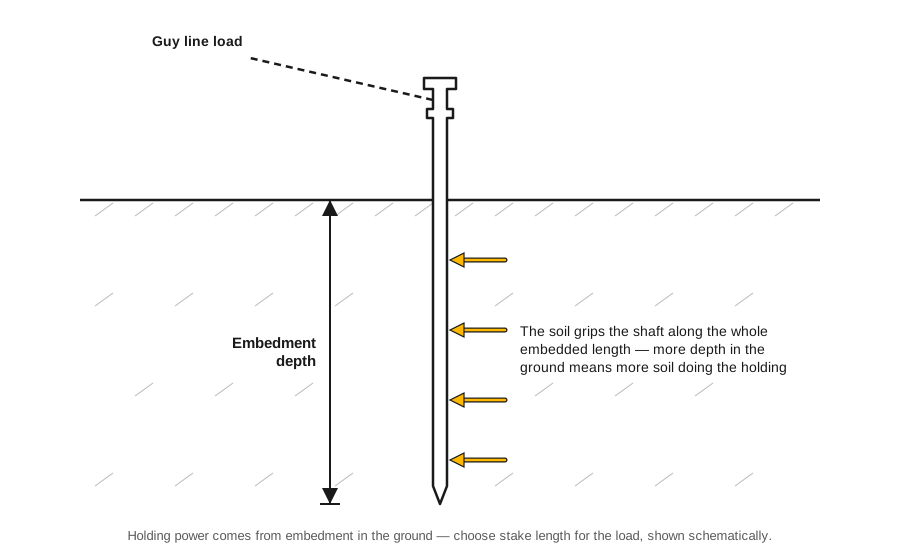
Drive the stake straight up and down. Vertical gives the most holding power, because more ground sits between the shaft and the guy-line pull. The IFAI staking research puts a figure on it: a stake angled 30 degrees from vertical loses roughly 23% of its holding capacity compared with a vertical stake at the same depth.
The accepted field tolerance is up to about 10 degrees leaning away from the structure — never leaning toward the tent (forward), and never sideways. Straight up and down, or a slight lean back: anything beyond that is costing you holding power. In hard ground a vertical start is often the only option anyway — see the hard-ground driving guide for technique when the surface is fighting you.
Check for Buried Services First
Before any stake goes in, know what is under the ground. Driving a stake into a buried cable or gas line is one of the few mistakes on a marquee site that can be fatal. MUTA's 2026 Best Practice Guide makes cable avoidance a formal requirement before ground penetration where underground services are unknown.
In UK practice that means obtaining the venue's service drawings and, where services are unknown, poorly documented, or you are on estate or heritage ground, running a CAT-and-Genny survey (a cable avoidance tool with a signal generator) across the staking area before you start. Mark located services and keep a wide margin clear of them.
In the demonstration above (filmed in the US) the crew work around utility-locate marks — in that scheme red is electricity, yellow is gas, and orange is telephone. The colours differ in the UK, but the principle is the same everywhere: locate before you drive, and treat anything marked as a no-go zone.
The Right Kit — Driver, Cup and Stake
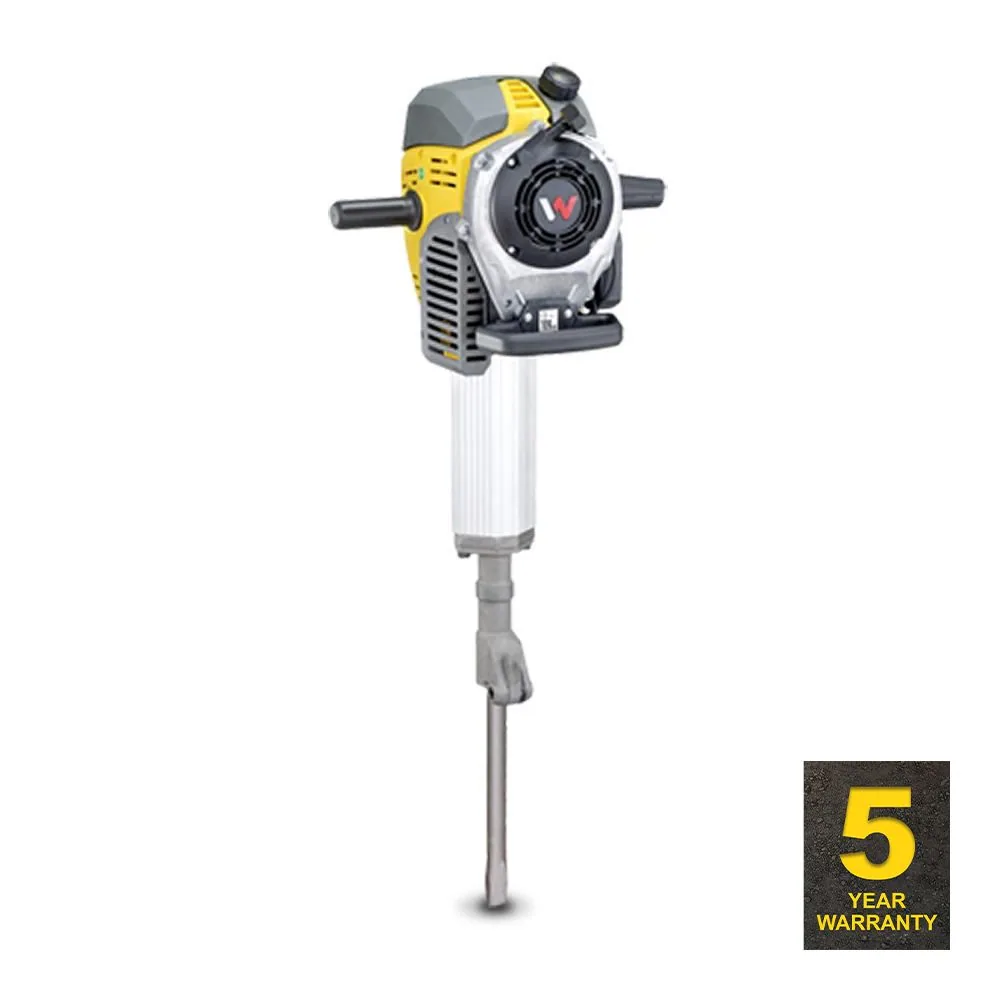
The driver we supply for this job is the Wacker BH55, a petrol percussion breaker adapted for marquee stake driving. It delivers consistent impact energy per blow regardless of operator fatigue, which is what keeps a stake tracking straight rather than deflecting between inconsistent hand blows.
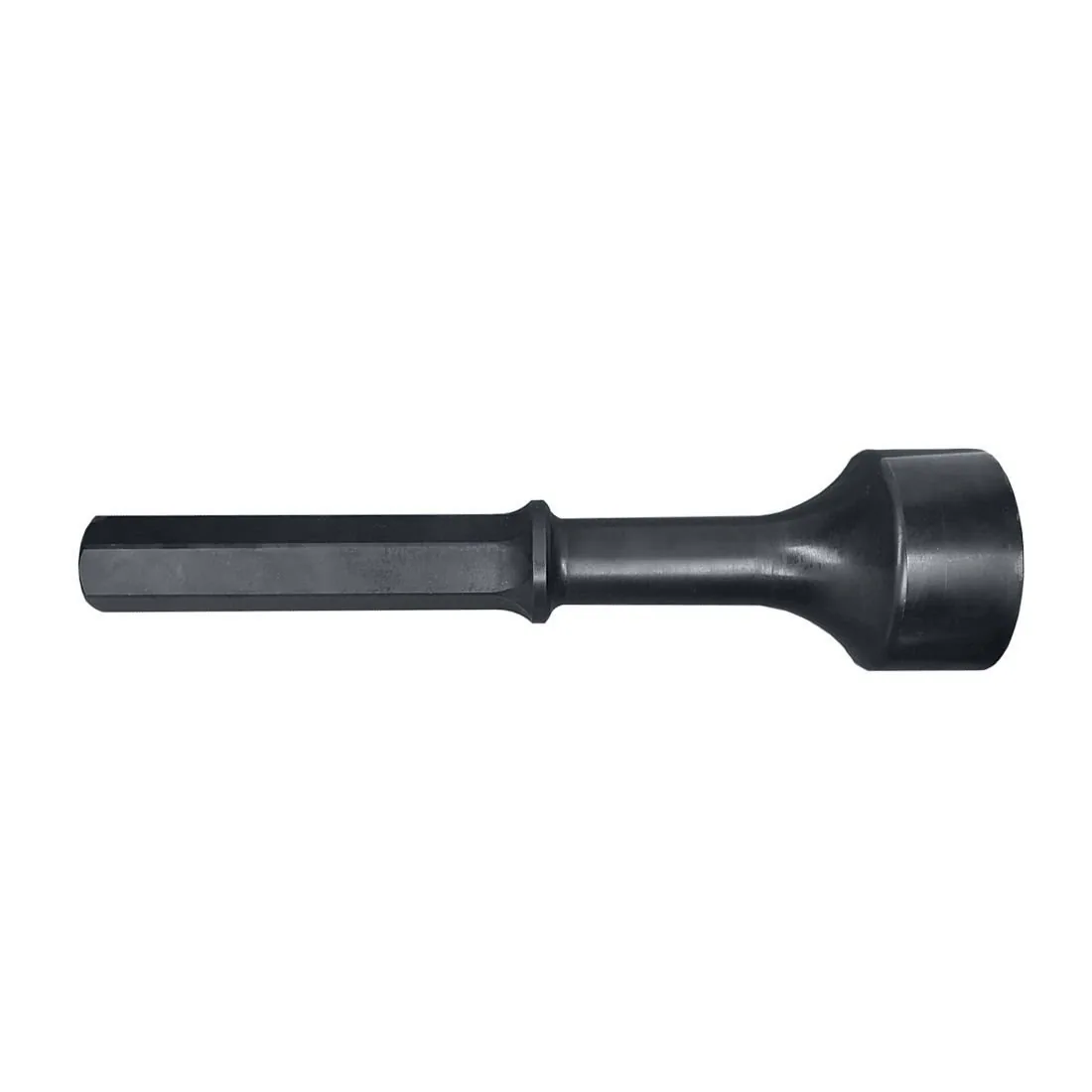
Between the breaker and the stake sits the marquee stake driving cup. The cup gives the machine a clean interface onto the stake head and protects that head from mushrooming under repeated impact — which pays off at de-rig: a clean head lets an extraction tool grip properly. How much time that actually saves depends on the ground you are pulling out of, which is covered in the guide to stake extraction technique and ground conditions. The cup is also the part the holder guides onto the stake, so a well-fitting cup makes the two-person method safer and quicker.
The stake itself still has to be right for the ground and the structure. Use the stake calculator to size your stake schedule by structure type and ground condition, and the complete guide to marquee stakes for material and size detail. A powered breaker drives a poor stake into the ground just as fast as a good one — it will simply banana more quickly in hard ground.
A Straight Conversation About Your Setup
If you are weighing up a powered driver for your crews, or want to talk through which driver, cup and stake combination suits the ground you work in, we are happy to help. No hard sell — just a straight conversation about what you are dealing with.
Email: hoganuk [at] hoganstakes.co.uk
Contact form: hoganstakes.co.uk/contact
Product range: hoganstakes.co.uk/products
Hogan Stakes UK is the sole authorised UK distributor of stakes manufactured by Hogan Tent Stakes, producers of premium tent and marquee stakes in the USA since 1948.
This guide is intended for professional reference. Powered breakers are workplace equipment — follow the manufacturer's operating instructions, your own risk assessment, and PPE requirements. For underground-service avoidance, follow HSE guidance and the venue's service information.
Source video: Celina Tent, "How To Drive a Tent Stake (with an electric or gas breaker hammer)" (YouTube, ID 4FakM9ug4G8). Used as a technique reference; the guidance above is adapted for UK practice.
Common Questions
Can one person drive stakes with a powered breaker?
It is a two-person job. One person holds and guides the stake; the other operates the breaker. Working solo means steadying the stake with one hand while running the machine with the other, which puts a hand close to the impact point and tends to drive stakes off line. Use a holder and an operator.
How should the holder hold the stake?
Low down, below the ring or head — never up near the top where the cup and breaker meet. The holder stands on the inside of the stake line with their back to the tent, feet shoulder-width apart for a stable stance. Holding low keeps hands clear of the machine and the pinch point where the cup seats onto the stake.
What angle should marquee stakes be driven at?
Vertical — straight up and down — gives the most holding power; IFAI data shows a stake angled 30 degrees from vertical loses roughly 23% of its capacity at the same depth. The accepted field tolerance is up to about 10 degrees leaning away from the structure. Never lean the stake toward the tent (forward), and never sideways.
Is a powered breaker safe to use for stake driving?
Yes, with discipline. The body of the machine gets very hot in use — hold it low, around the cup, and never touch the upper part. Keep hands away from the gap where the cup seats onto the stake head, which is the main pinch point. Operator on the handles, holder low on the stake, and follow the manufacturer's operating instructions and your PPE requirements.
Do I need to check for buried services before driving stakes?
Yes. Driving a stake into a buried cable or gas line can be fatal, and MUTA's 2026 Best Practice Guide makes cable avoidance a requirement before ground penetration where services are unknown. Obtain the venue's service drawings and, where services are uncertain or undocumented, run a CAT-and-Genny survey across the staking area, mark anything located, and keep a wide margin clear.
What driver and cup does Hogan supply for powered stake driving?
The Wacker BH55 petrol percussion breaker, used with a marquee stake driving cup. The breaker delivers consistent impact energy per blow, and the cup protects the stake head from mushrooming while giving the machine a clean interface onto the stake. A protected head also lets an extraction tool grip cleanly at de-rig.
Kit for powered stake driving
Driving stakes into compacted ground?
The Wacker BH55 breaker drives Tiger stakes cleanly, with a Hogan-compatible driving cup included. Ask us for a trade quote.