Marquee Stake Specifications by Structure Type — The UK Hire Company Reference Guide
Different structures place different loads on their ground anchors. A pole marquee distributes its load through angled guy ropes at the perimeter; a clearspan structure concentrates it at base plates that must resist forces in three directions simultaneously; a stretch tent applies continuous tension at every pole anchor point throughout the event. Specifying the same stake for all three is the same as specifying the same rope for a winch, a tarpaulin, and a yacht's standing rigging. They are different jobs.
This guide maps stake specification to structure type. The comparison table at the end is designed to be bookmarked and used as a quick reference when reviewing stock or planning an event.
Clearspan Marquees
Clearspan marquees are engineered aluminium-frame structures spanning wide, column-free interiors. The frame bears the structural loads, and each leg transfers its share to a base plate pinned to the ground with stakes.
The critical difference from pole marquee anchoring is the direction of the forces. Base plate stakes on a clearspan structure must resist:
- Vertical uplift — wind suction on the roof drawing the structure upward
- Lateral force — wind pressure on the walls pushing the structure sideways
- Overturning moment — the combined effect of uplift and lateral force trying to rotate the frame about its leeward legs
Simple pull-out resistance is not the full picture. Stakes must also resist lateral loads — which means correct driving depth and diameter are both critical, as is the angle of drive relative to the anticipated load direction.
Clearspan stakes are longer and heavier-gauge than pole marquee stakes. Typical range: 600mm–1,100mm length, 16mm–25mm diameter. A factor of safety of at least 2x is recommended for clearspan base plate pinning. For large structures (50m+ wide), this means engineering the anchor specification from the structure manufacturer's load pack, not estimating from general guidance.
Clearspan structures are engineered to withstand approximately 100 km/h (62 mph) of wind load when correctly anchored. That wind resistance depends entirely on the anchor holding. A correctly sized, correctly installed stake in adequate ground is what the engineering calculation assumes.
MUTA requires a pull test for on-site verification. BS EN 13782:2015 applies to temporary tent structures over 50 sq m. CDM Regulations 2015 apply to clearspan installation as construction work. See the full Clearspan Anchoring Guide →
Traditional Pole Marquees
Pole marquees anchor through guy ropes from each pole, with stakes driven close to vertical to resist the direction of the rope loads. Every stake is load-bearing — there are no base plates and no spare capacity. Remove any single stake from a correctly erected pole marquee and the structural integrity of that section is immediately compromised.
A medium pole marquee carries upwards of 60–75 large stakes. At that volume, the stakes are not an accessory to the structure — they are the structure's connection to the ground, repeated dozens of times across the footprint.
MUTA minimum specification: 450mm long, 12mm diameter per upright. In practice, the main anchor points on a medium or large pole marquee benefit from longer stakes — 36" (approximately 920mm) to 42" (approximately 1,070mm) for principal anchor positions. The driving angle matters: a vertical stake, or one leaning no more than about 10 degrees away from the load, keeps the most ground mass behind the shaft — a stake angled 30 degrees off vertical gives up roughly 23% of its holding.
As a rule of thumb, aim to drive at least two-thirds of the stake length below ground. MUTA requires a pull test for on-site verification. In saturated soil — the IFAI Staking Study found capacity drops by approximately 50% in saturated conditions — pull test verification is essential before the structure opens. See the full Pole Tent Staking Guide →
Frame Marquees
Frame marquees use a rigid aluminium frame to eliminate the need for centre poles, but the frame is not freestanding. Base plates at each leg must be pinned to the ground to resist wind uplift and lateral movement. The anchoring principle is similar to clearspan: base plate stakes in driven holes, resisting uplift and lateral loads.
Frame marquees are typically smaller than clearspan structures, and the loads on each base plate are correspondingly lower. Typical stake range: 450mm–900mm length, 12mm–20mm diameter. MUTA minimum (450mm/12mm) represents the floor for frame marquee anchoring. For larger frames or exposed sites, the longer end of the range is appropriate.
No guy ropes protrude from the footprint, which is an advantage on restricted sites. This also means all anchoring load is concentrated in the base plate stakes — correct installation and verified pull-out resistance at each point are essential.
Stretch Tents
A stretch tent has no rigid frame. Its shape is defined entirely by the tension in the elastic polyester-lycra fabric, stretched between poles at varying heights and angles. Every pole transfers its load directly to its ground anchor through a guy rope or direct connection. There are no base plates, no shared load paths, and no structural redundancy in the way a rigid frame provides.
This creates two staking challenges:
Volume of anchor points. Stretch tents have more anchor points per square metre than traditional marquees. Each pole is an independent anchor requirement.
Dynamic loading. The elastic fabric does not absorb wind loads passively — it stretches and releases with each gust, creating cyclic force variation at each anchor point. Stakes experience repeated loading and unloading rather than a steady sustained pull. This is more damaging to soil grip over time than a static load, and accelerates the rate at which stakes work loose in softer ground.
On grass or firm soil: 1-metre stakes (approximately 1,000mm) are the standard for stretch tent installation. On hard ground — compacted showground or dried summer soil — standard stakes bend before reaching required depth. High alloy steel stakes with Hogan's heat-drawn point are the appropriate specification for these conditions: drives straight to depth, consistent profile, clean extraction.
The failure mode to avoid in stretch tents is cascade failure: one anchor point gives way, its load redistributes to adjacent anchors, which are now over-loaded, and the failure propagates. Over-engineering each anchor point is not excessive caution — it is the correct engineering response to a zero-redundancy system.
For the heaviest stretch tent anchor points, use 42" (1,070mm) or 60" (1,530mm) depending on ground conditions and load requirements. See the full Stretch Tent Anchoring Guide →
Sailcloth Marquees
Sailcloth marquees use a translucent or light-coloured tensioned fabric that achieves its characteristic drape through precisely controlled tension at each anchor point. The structural aesthetic depends on the anchoring being correct: a stake that fails to seat to full depth at a high-tension anchor point does not just create a safety problem. It changes the shape of the structure.
Main ridge pole anchor points carry disproportionately high loads relative to perimeter guy points. These positions require the longest, heaviest-gauge stakes in the sailcloth specification. Multi-stake configurations with spreader bars are appropriate for the highest-load positions in soft ground; Hogan's heat-drawn point for hard ground where single stakes are specified.
Typical specification for main anchor points: 42"–60" length (1,070mm–1,530mm), 29mm diameter. Perimeter positions: 36"–42" length, 26–29mm diameter. The 75% embedment rule applies at all positions. See the full Sailcloth Tent Guide →
Pagoda and Pop-Up Marquees
Pagodas and pop-up structures are lighter than full marquees and have smaller footprints. Individual anchor loads are lower — but wind uplift is not proportional to size in the simple way that might be assumed. A small, lightweight structure catches wind on its roof efficiently, and if it is not adequately anchored it will travel.
Base plate stakes at each leg: 350mm–600mm length, 12mm–16mm diameter for standard pagoda configurations. Full depth embedment is essential — a pagoda stake at 50% embedment has dramatically lower uplift resistance than one at full depth.
For linked pagoda configurations, the perimeter anchors carry higher loads than interior junction positions. Perimeter stakes should be specified to the longer end of the range.
Tipi and Kata Tents
Tipis and kata tents are large conical structures with a central pole framework, anchored by perimeter stakes and apex guy ropes. They are often linked in groups for large events and are growing in popularity for weddings and outdoor events in the UK.
Perimeter stakes: 36"–42" length, 26–29mm diameter for main anchor points. Apex guy anchors should be treated as high-load positions — multi-stake or longer stakes at these positions are appropriate.
Tipis running at high seasonal volume benefit from the consistency argument: stakes that come out clean and undamaged at extraction can go straight back into inventory. Bent or burred stakes from hard ground sites add replacement cost across a long season.
Inflatables
Inflatable anchoring is a compliance question, not a best-practice judgment call. BS EN 14960 sets specific minimums with no engineering discretion:
- Minimum stake diameter: 16mm
- Minimum stake length: 380mm
- Minimum anchor points: 6 per inflatable
- Minimum holding force: 163 kg per anchor point
- Maximum operating wind speed: 24 mph
PIPA inspectors test to 165 kg of pulling force. Stakes that move under this load fail the inspection. On hard standing, ballast at 163 kg per anchor point is the compliant alternative.
For full detail on EN 14960 compliance: Staking for Inflatables: EN 14960 Compliance Explained →
Comparison Table — Stake Specifications at a Glance
| Structure Type | Typical Length | Typical Diameter | Primary Load Type | Notes |
|---|---|---|---|---|
| Clearspan marquee | 600mm–1,100mm | 16mm–25mm | Multi-directional (uplift + lateral + overturning) | Engineer from manufacturer’s load pack |
| Pole marquee | 770mm–1,070mm (30”–42”) | 12mm–26mm | Angular pull-out via guy ropes | 60–75 stakes on medium structure |
| Frame marquee | 450mm–900mm | 12mm–20mm | Uplift + lateral at base plates | No guy ropes outside footprint |
| Stretch tent | 900mm–1,530mm (up to 60”) | 16mm–26mm | Continuous tension, dynamic loading | Each pole is independent anchor point |
| Sailcloth marquee | 1,070mm–1,530mm (42”–60”) | 29mm | High tension at ridge anchors | Aesthetic precision required |
| Pagoda / pop-up | 350mm–600mm | 12mm–16mm | Uplift at base plates | Full depth essential; wind uplift disproportionate to size |
| Tipi / kata tent | 920mm–1,070mm (36”–42”) | 26–29mm | Perimeter pull-out and apex guy anchors | Consistent inventory saves replacement cost |
| Inflatables | 380mm+ | 16mm+ | Pull-out per EN 14960 | 163 kg per anchor point, at every anchor point the manufacturer provides |
Where the Two Shortest Tiger Sizes Fit
The table runs down to 350mm, and two Tiger sizes sit at that light end of it. The 18" × 5/8" (460mm × 16mm) meets the EN 14960 dimensional minimums for inflatable anchor points and suits light tipi and pole-tent positions. It is not a marquee structural size and should not be specified as one. The 24" × 1" (610mm × 26mm) is the more useful of the two for general hire work: it carries the full 26mm shaft in a short length, which is what you want on firm or shallow ground where a 30" is more depth than the site will actually take. Neither replaces a structural anchor. What they do is stop you reaching for a 36" at a position that never needed one.
Building a Single-Inventory Strategy
Mid-size hire companies that operate across multiple structure types face a stock management question: how many different stake specifications do you need to carry, and at what cost in storage, sorting, and training?
The case for standardising is stronger than it might appear. High alloy steel stakes with Hogan's heat-drawn point in 29mm diameter and 42"–60" lengths cover the majority of professional marquee anchoring applications. They exceed the MUTA minimum for pole marquees, are appropriate for clearspan base plate applications in the lower range, and substantially exceed the EN 14960 minimums for inflatables.
Running a single stake range does not mean ignoring specification. It means choosing a stake that is appropriately rated for the most demanding application in your fleet, and understanding that it will be over-specified for lighter applications. The operational efficiency gain — simplified inventory, consistent crew training, one removal tool for all stakes — often justifies the unit cost difference over a season's work.
Where structure-specific requirements push outside a single range — very long clearspan stakes at 1,000mm+, or purpose-specific screw anchors for extreme hard ground — these become separate line items in the inventory, not the basis for fragmentation across the whole stock.
Hogan Tiger Stakes at 26–29mm diameters and 30"–60" lengths exceed the dimensional minimums across all sizes. The material standard (high alloy steel, heat-drawn point) is what ensures those dimensions translate to holding power on the ground conditions UK operators actually encounter.
Get in Touch
If you are reviewing your stake inventory across structure types, or want to discuss specification for a specific structure or ground condition, get in touch.
Email: hoganuk [at] hoganstakes.co.uk
Contact form: hoganstakes.co.uk/contact
Product range: hoganstakes.co.uk/products
Citations:
MUTA Best Practice Guide: muta.org.uk |
BS EN 13782:2015 at BSI: knowledge.bsigroup.com |
PIPA / EN 14960: pipa.org.uk |
IFAI Pullout Capacity Pocket Guide: tent.textiles.org
More from the Hogan Stakes Resource Library
The Complete Guide to Marquee Stakes for UK Hire Companies
Everything you need to know about stake selection, ground conditions, installation depth, structure types and accessories — written for UK hire companies and event professionals.
Read the Guide →Staking for Inflatables: EN 14960 Compliance Explained
EN 14960 minimum requirements, why common staking methods fail, what PIPA inspectors check, and how to run a pre-event ground test.
Read the Guide →The Complete Guide to Marquee Anchoring on Hard Ground
UK ground types, why mild steel fails, IFAI holding power data, and how to match your stake specification to the ground you are actually working on.
Read the Guide →Common Questions
What size stakes for a clearspan marquee?
Clearspan baseplates typically require the 42" × 1.125" Tiger Stake as a minimum, with 48" or 60" at primary anchor points, high-load positions, or in soft ground. Clearspan structures concentrate all loads at the legs — the stakes at each leg must meet the engineer's specified minimum pull-out load. In soft ground, gang staking through spreader plates at each baseplate is standard practice.
What size stakes for pole marquees?
For pole marquees in good ground, the 30" or 36" Tiger Stake suits most perimeter positions. Main anchor points and hard-ground sites call for 36" or 42". A medium pole marquee typically runs 60–75 stakes across all positions — perimeter guys, side wall, and internal.
What size stakes for stretch tents?
Stretch tents work from the 42" Tiger Stake upward — the continuous dynamic tension at every anchor point is higher than most other structure types. Primary anchors at king poles warrant the 48" or 60" stake. Gang staking with spreader bars is standard at all main anchor positions in anything other than firm ground.
What size stakes for sailcloth tents?
Sailcloth tents use 42" stakes at most positions, with 48" or 60" at the highest-load main ridge anchor positions. The standard Anchor Industries Aurora installation pattern uses a multi-stake spreader bar at each main ridge anchor — the number of stakes per bar (typically 3–6) depends on ground conditions and structure span.
Products referenced in this guide
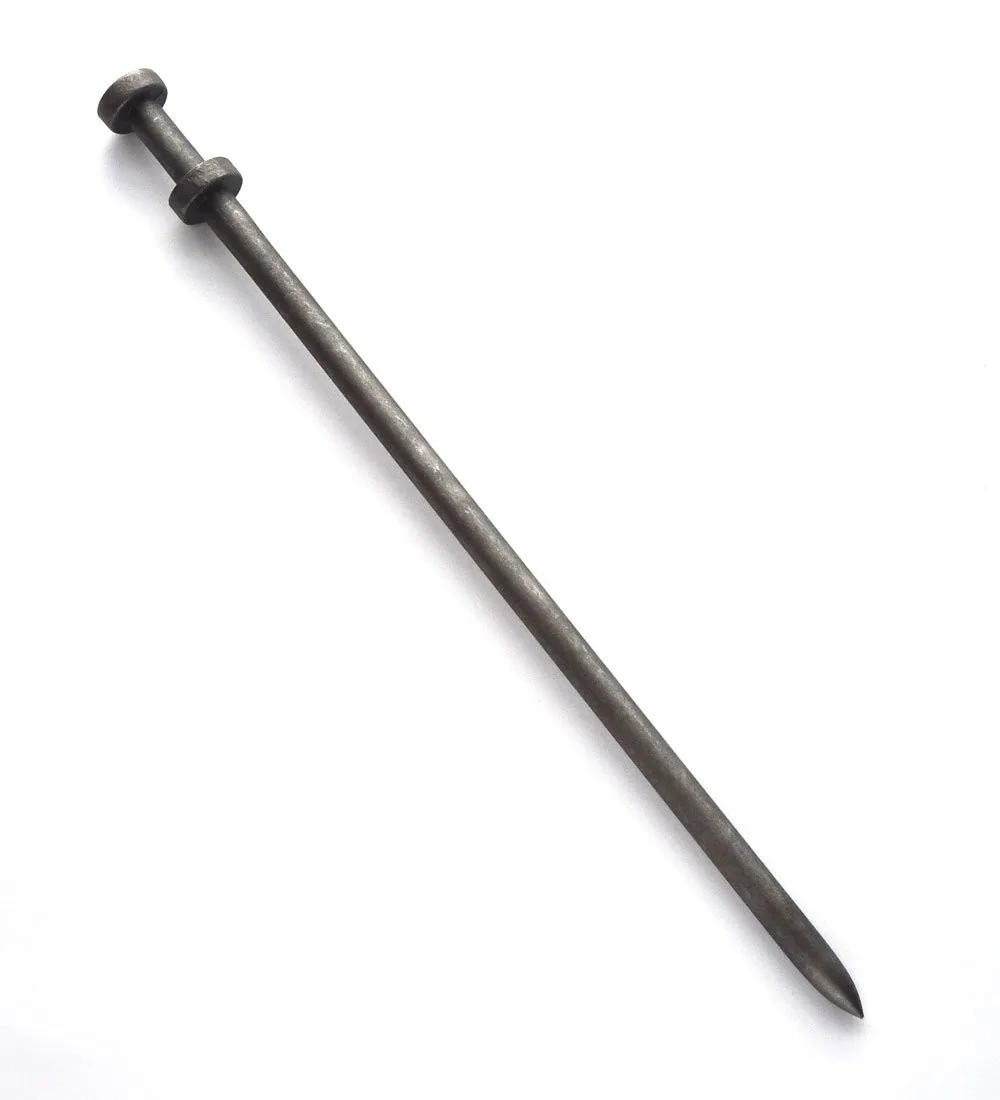
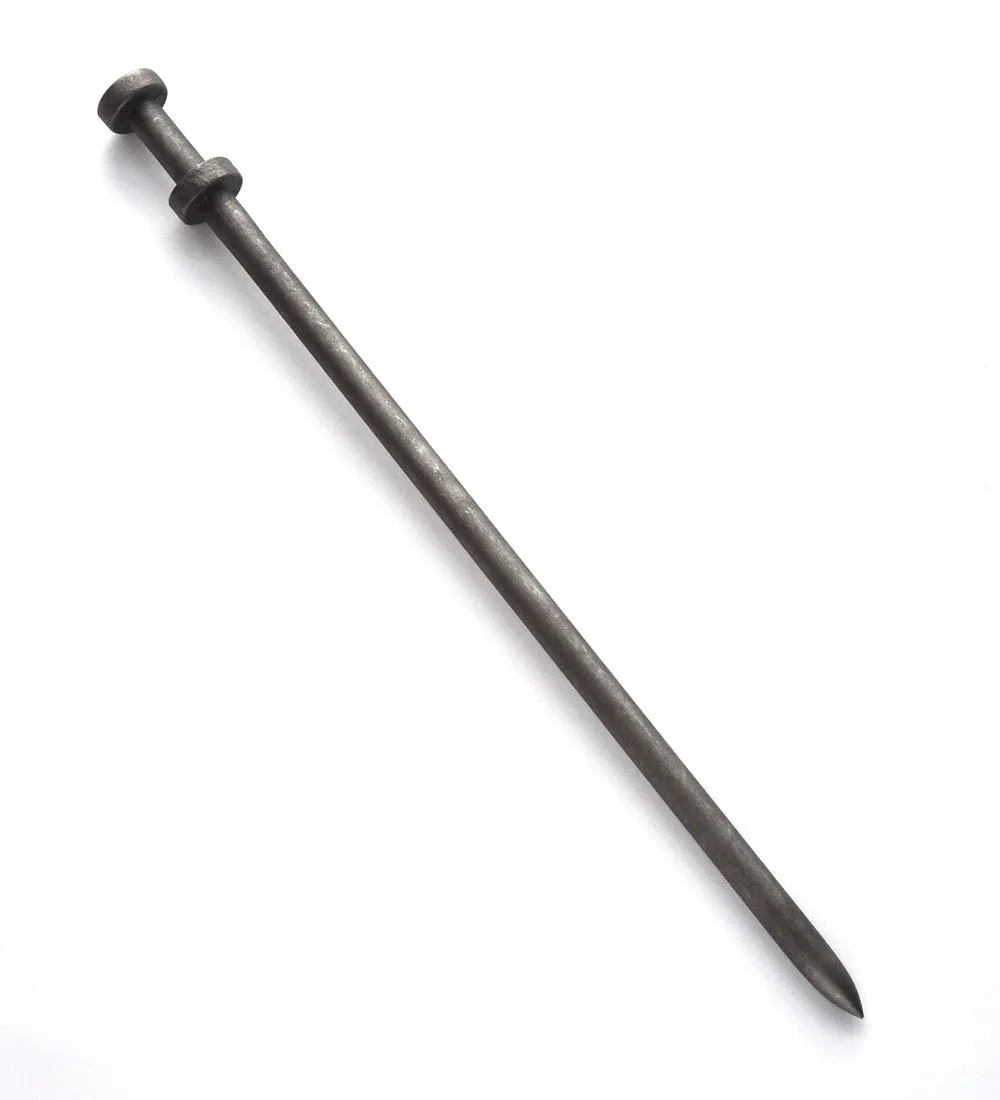
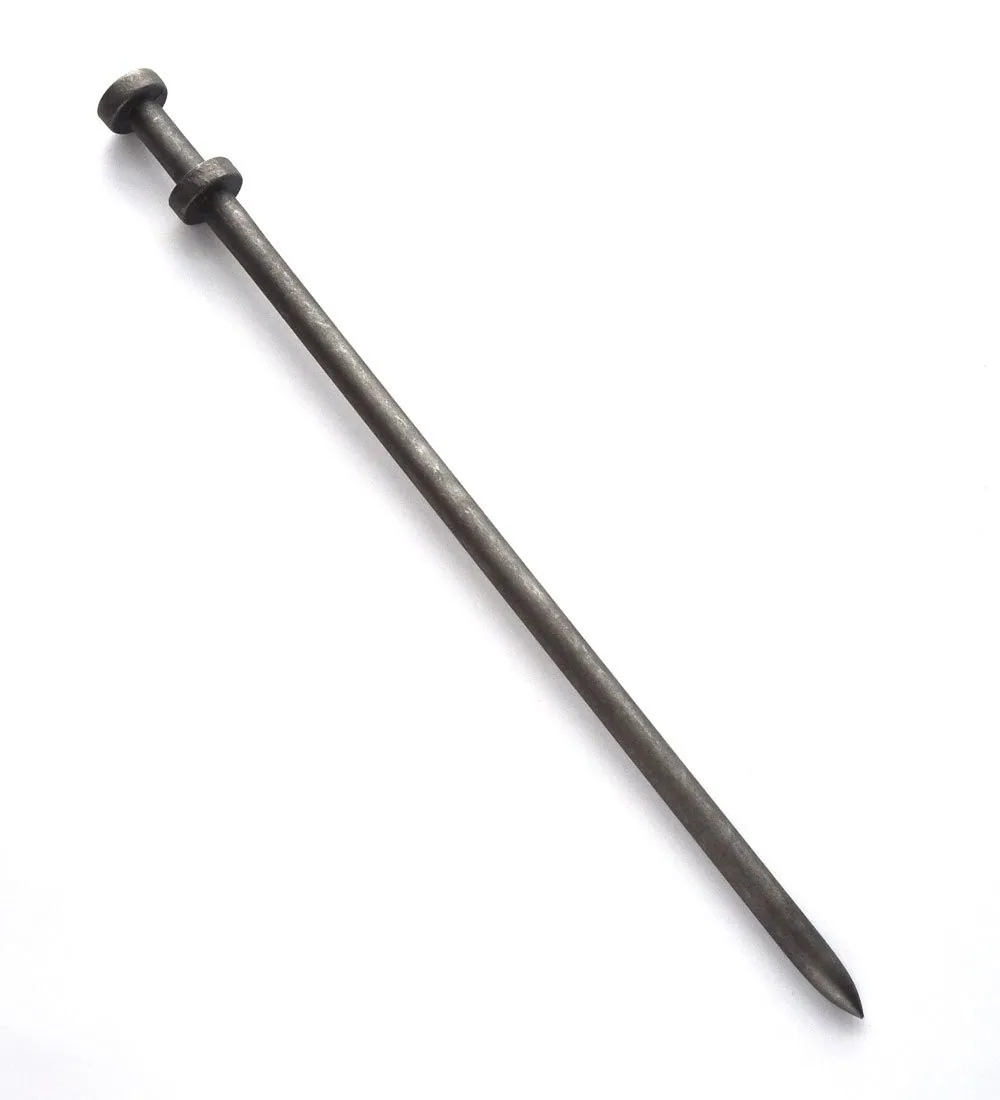
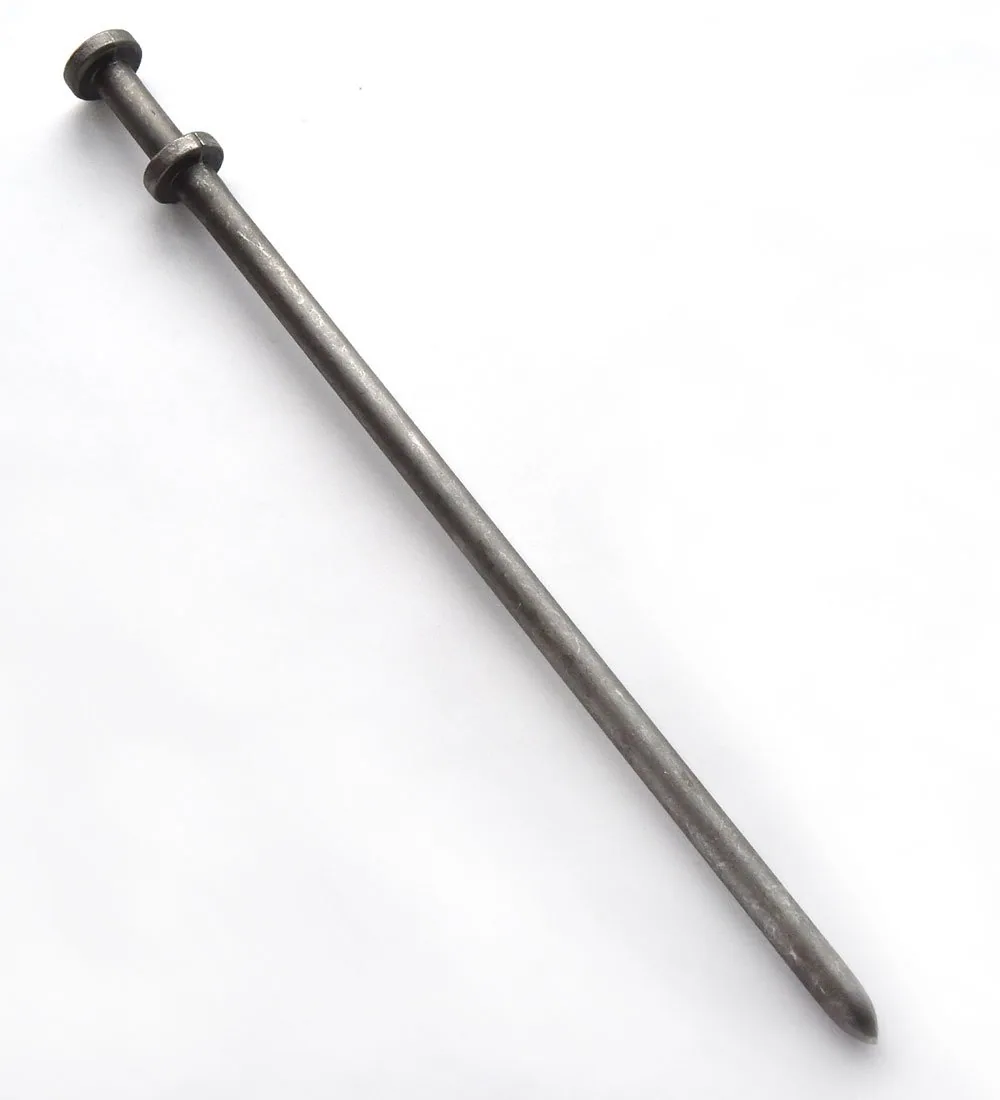
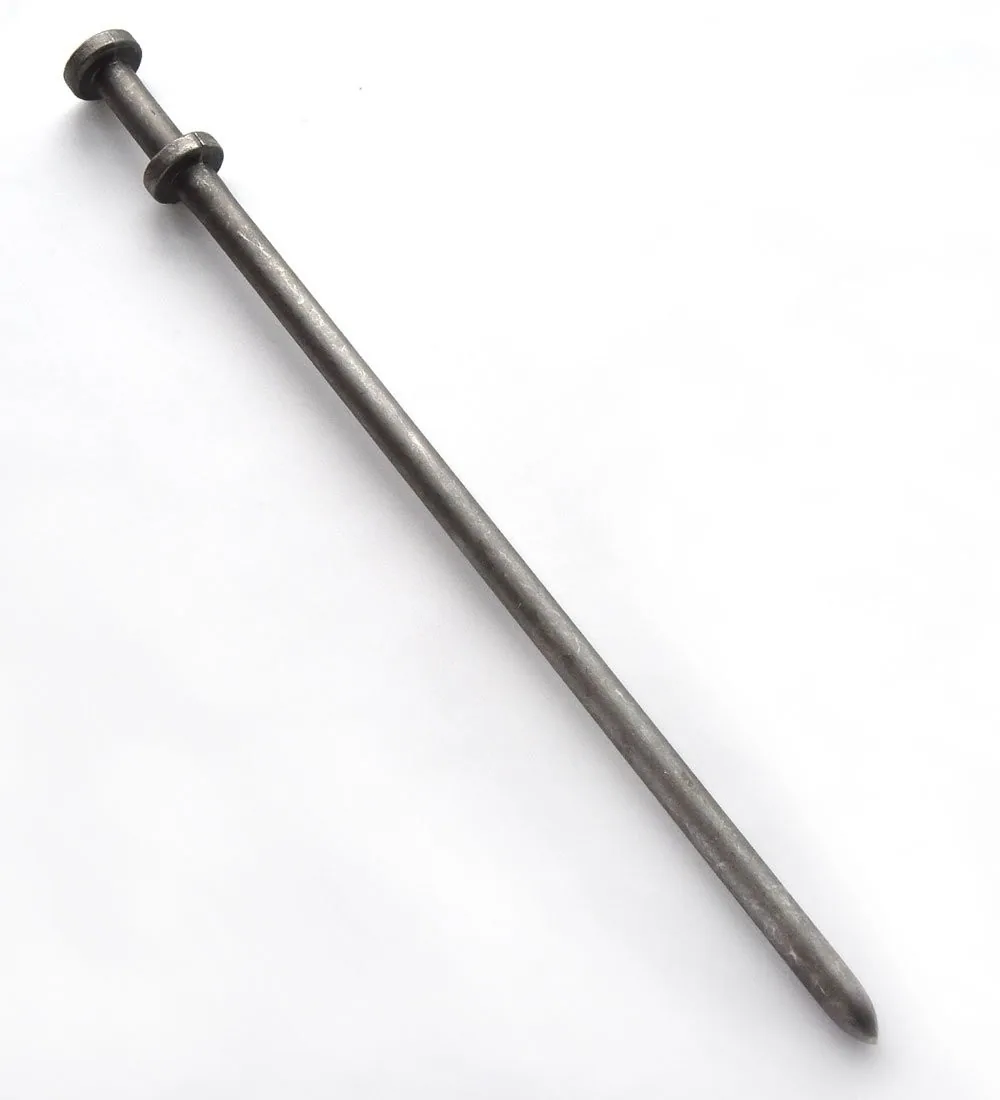
Specifying stakes by structure type?
Tiger stakes for pole, frame, clearspan, sailcloth and stretch — matched to load and ground. Tell us the structure and we'll advise.