EN 14960 Ground Anchoring for Inflatables
What the Standard Requires on Site
Marquee stakes fully forged from high alloy steel, engineered above the MUTA standard. Eight sizes, 18" to 60".
Hogan Stakes UK is the sole UK distributor for Hogan Manufacturing’s Tiger Stakes, forged since 1948, and inflatable hire operators are one of the trades we supply. We drive these stakes on our own events. UK stock is held in Yorkshire. £5m product liability cover is in place. Wrong size? Send it back and we swap it; unused and never driven, within 14 days.
EN 14960 gives inflatable hire operators a set of precise anchoring requirements: minimum stake dimensions, minimum holding force, minimum anchor points, and a maximum operating wind speed. These are not guidelines. They are the standard against which PIPA inspectors test, and against which courts have assessed liability when anchoring has failed.
Why Inflatable Anchoring Is a Different Conversation
A bouncy castle or inflatable obstacle course is a high-sail-area structure. Its large vertical faces catch wind effectively, and the forces generated by even moderate gusts are substantial relative to the structure's weight.
EN 14960 recognises this by setting a maximum operating wind speed of 24 mph (Force 5). Above this speed, the inflatable must be deflated and evacuated. The anchoring system is designed to hold a properly deflated inflatable in place and to provide the margin of safety needed while the operator assesses conditions and acts. An anchor that barely passes in calm conditions is not a safe anchor at the operational limit.
The consequence of anchor failure in inflatables is not a collapsed canopy or a relocated tent wall. An unanchored inflatable can become airborne. The loads generated by a 24 mph wind on a 5m × 5m inflatable are significant, and if an anchor fails, the cascade is fast and potentially catastrophic. This is not a hypothetical risk — it has resulted in a criminal conviction.
What EN 14960 Requires — The Anchoring Minimums
EN 14960 sets these minimum requirements for outdoor inflatable anchoring:
- Minimum stake diameter: 16mm
- Minimum stake length: 380mm
- Minimum anchor points: 6 per inflatable
- Minimum holding force: 163 kg per anchor point
- Maximum stake protrusion above ground: 25mm
- Installation angle: 30–45 degrees from vertical
- Maximum operating wind speed: 24 mph
Each of these is a minimum, not a recommendation. An operator who meets all seven criteria is compliant. An operator who fails any one of them is not, regardless of how well the others are met.
Why Standard Rebar Fails the EN 14960 Test
The most common compliance gap in the inflatable hire industry is stake diameter. Many operators use standard rebar — steel bar stock available from builders' merchants — for staking. Standard rebar is available in 10mm, 12mm, and 16mm diameters. The 10mm and 12mm sizes fail the EN 14960 dimensional requirement before holding force is even tested.
A 12mm stake, however deeply driven, however firmly it holds in the specific ground conditions, does not meet the EN 14960 standard. The diameter is the disqualifying factor. PIPA inspectors measure stake diameter as part of their inspection routine, and a 12mm stake is a fail.
14mm rebar also fails the diameter requirement. Only 16mm or above meets the standard. And this is the minimum — operators should be thinking about what exceeds this, not what just meets it.
Smooth steel bar (as opposed to ribbed rebar) provides less friction with the surrounding soil. Ribbed rebar provides more. But neither the texture nor the depth of drive compensates for undersized diameter in a PIPA inspection.
Hard Standing and EN 14960 — What to Do When You Cannot Stake
On tarmac, concrete, block paving, or any surface where driving stakes is not possible, EN 14960 specifies a compliant alternative: ballast weighing at least 163 kg per anchor point.
The standard is explicit about what this means. Each individual anchor point must be secured by ballast at or above the 163 kg threshold. What does not meet the standard:
- Small sandbags (typically 20–25 kg each)
- Standard water barrels under 163 kg when full
- Ratchet-strapped weights that are not independently assessed for their per-anchor contribution
- Any ballast arrangement where individual anchor holding cannot be verified at 163 kg
SDS-drilled bolt anchors into concrete — threaded bar bonded with two-part resin into a drilled hole — meet the standard and provide high pull-out resistance. They require drilling equipment, curing time, and specialist technique. They are appropriate for long-running installations or regular use at the same venue.
For operators who regularly work on hard standing, carrying properly rated ballast and understanding how to calculate per-anchor capacity is a compliance requirement, not an optional upgrade.
The PIPA Inspection — What Your Inspector Is Checking
PIPA (the Play Inspection Association) operates the UK's inspection scheme for inflatable play equipment. PIPA inspectors are trained to BS EN 14960 and test anchor arrangements as part of their annual inspection process.
During an anchor inspection, a PIPA inspector will typically check:
- Stake diameter — measured physically; 16mm minimum
- Stake length — verified against the 380mm minimum
- Protrusion above ground — 25mm maximum; stakes protruding further are a trip hazard and a fail
- Installation angle — stakes should be driven at 30–45 degrees from vertical, angled away from the inflatable to resist the direction of pull
- Holding force — PIPA test load is 165 kg of pulling force; if the stake moves under this load, the anchor fails
The PIPA test load (165 kg) is slightly above the EN 14960 holding force minimum (163 kg). This margin is intentional. If you are self-testing before an inspection, use 163 kg as your compliance threshold and 165 kg as your target.
How to Conduct a Pre-Event Ground Pull Test
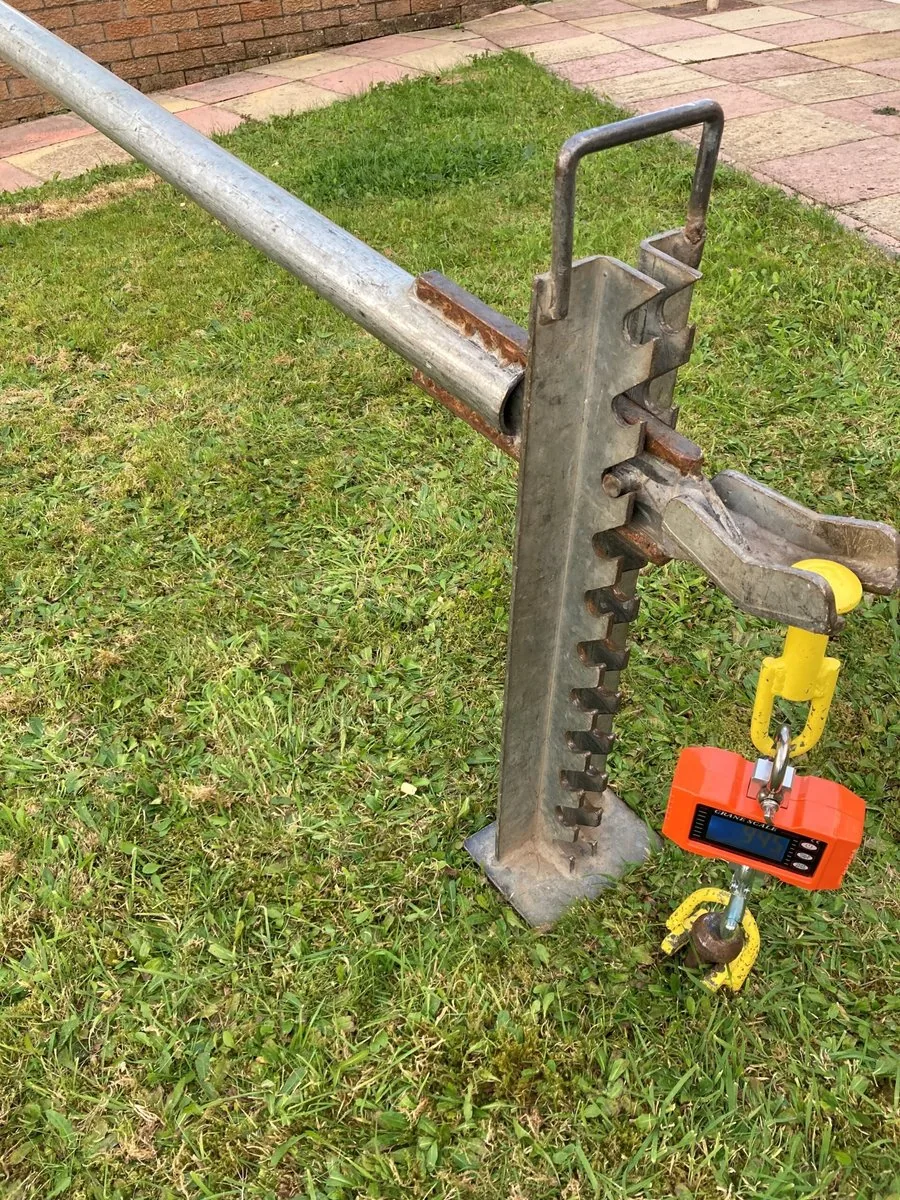
Operators can carry out their own pull test before each event. The procedure is straightforward and requires no specialist equipment beyond what most hire companies already carry.
Equipment needed:
- A load cell or calibrated luggage scale rated to at least 170 kg
- A strap or chain to connect the load cell to the stake head
- A pulling frame or leverage point that allows steady vertical force to be applied
Procedure:
- Drive a representative stake to full depth at the correct 30–45 degree angle, in a location representative of the actual installation ground.
- Attach the load cell to the stake head using the strap or chain.
- Apply a steady, increasing vertical pulling force using the frame or lever. Do not jerk — apply force progressively.
- Read the load at the point of first movement. Any movement below 163 kg is a fail for EN 14960 compliance.
- If the stake holds to 163 kg without movement, the ground is compliant for EN 14960 anchoring at this point.
- Repeat the test at multiple locations across the installation site. Ground conditions vary, and a single passing result does not characterise the whole site.
Note that this procedure tests compliance with EN 14960 (163 kg threshold). MUTA's pull test for marquees uses a lower threshold — these are different standards for different structure types. An inflatable operator must test to the higher EN 14960 threshold.
If the ground fails the pull test at any anchor point location, the anchoring strategy for that position must change before the inflatable goes up. Options include: longer stakes, wider diameter stakes, gang staking with a spreader bar, or ballast at the anchor point.
The Industry Context — Where the Standard Comes From
In 2016, a seven-year-old girl died when an under-anchored bouncy castle blew away in winds above the standard's limit, and the operators were jailed for manslaughter by gross negligence. The case is the reason the inspection regime is as rigorous as it is. We cover it, and the 24 mph operating wind limit, in full in our bouncy castle wind limits guide →
The case is cited here not to alarm, but because it is the factual context for the standard's existence and the inspection regime's rigour. PIPA was not established as an administrative exercise. It was established because inadequate anchoring kills people, and the industry needed a verifiable compliance framework.
Operators who understand the standard and test to it before every event are managing a real risk. Operators who do not are exposed to the same liability the Thurstons faced.
Tiger Stakes and EN 14960 — How Hogan Meets the Standard
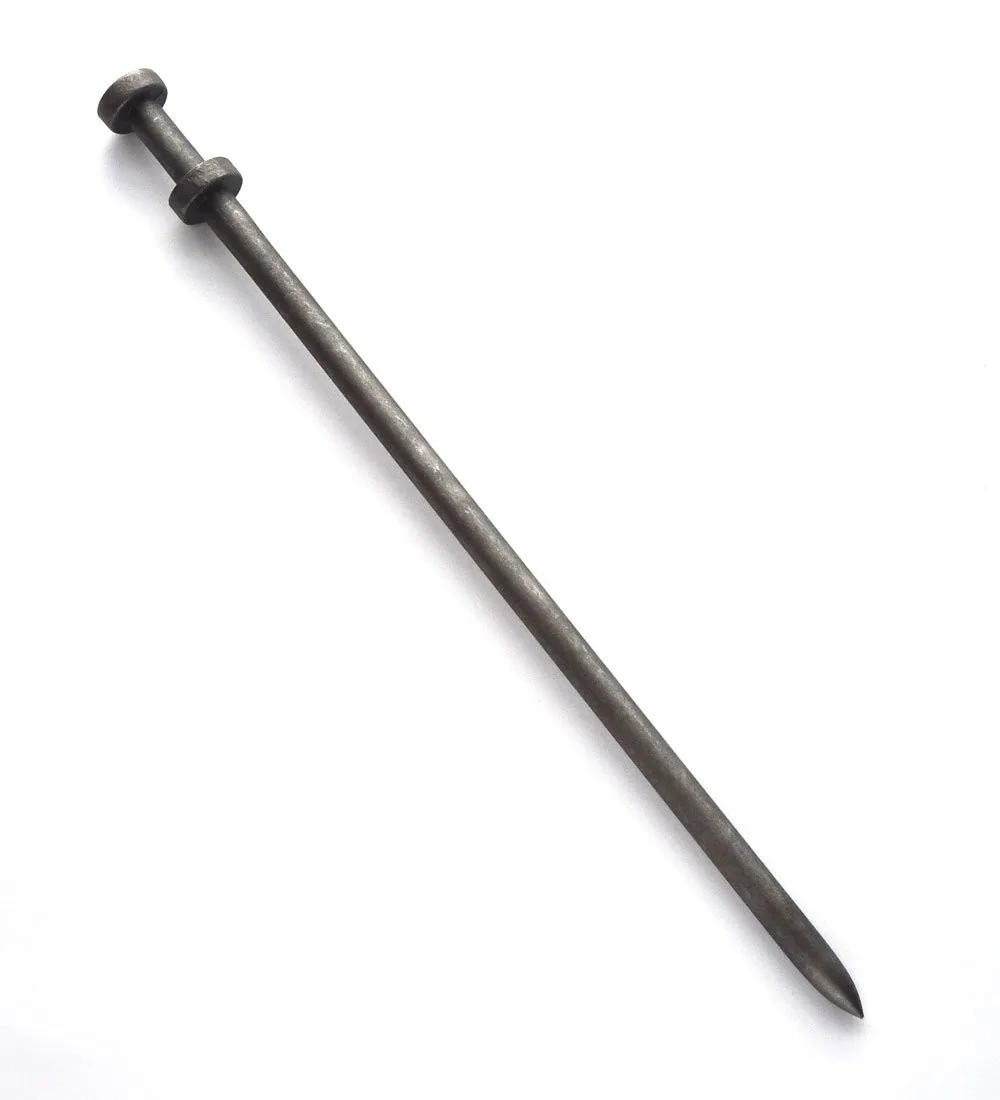
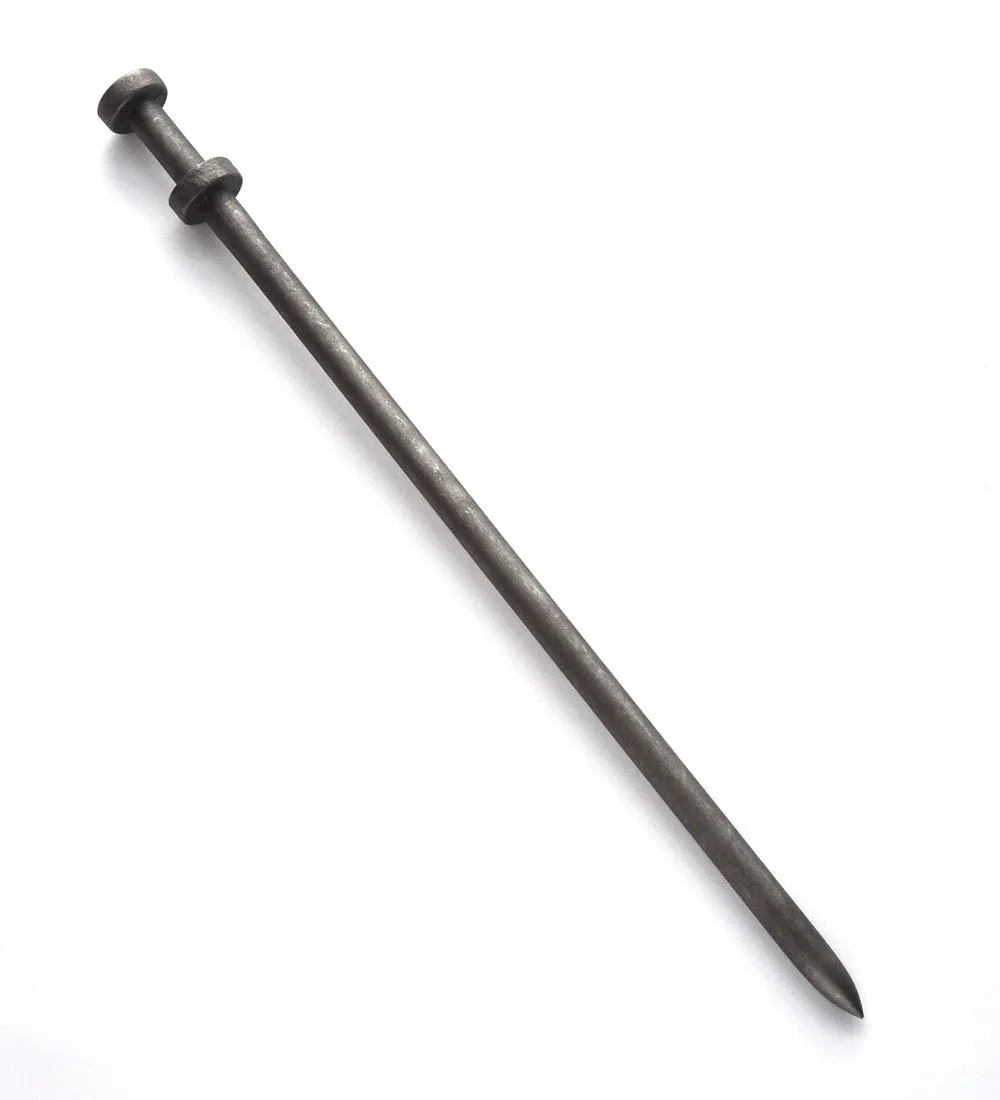
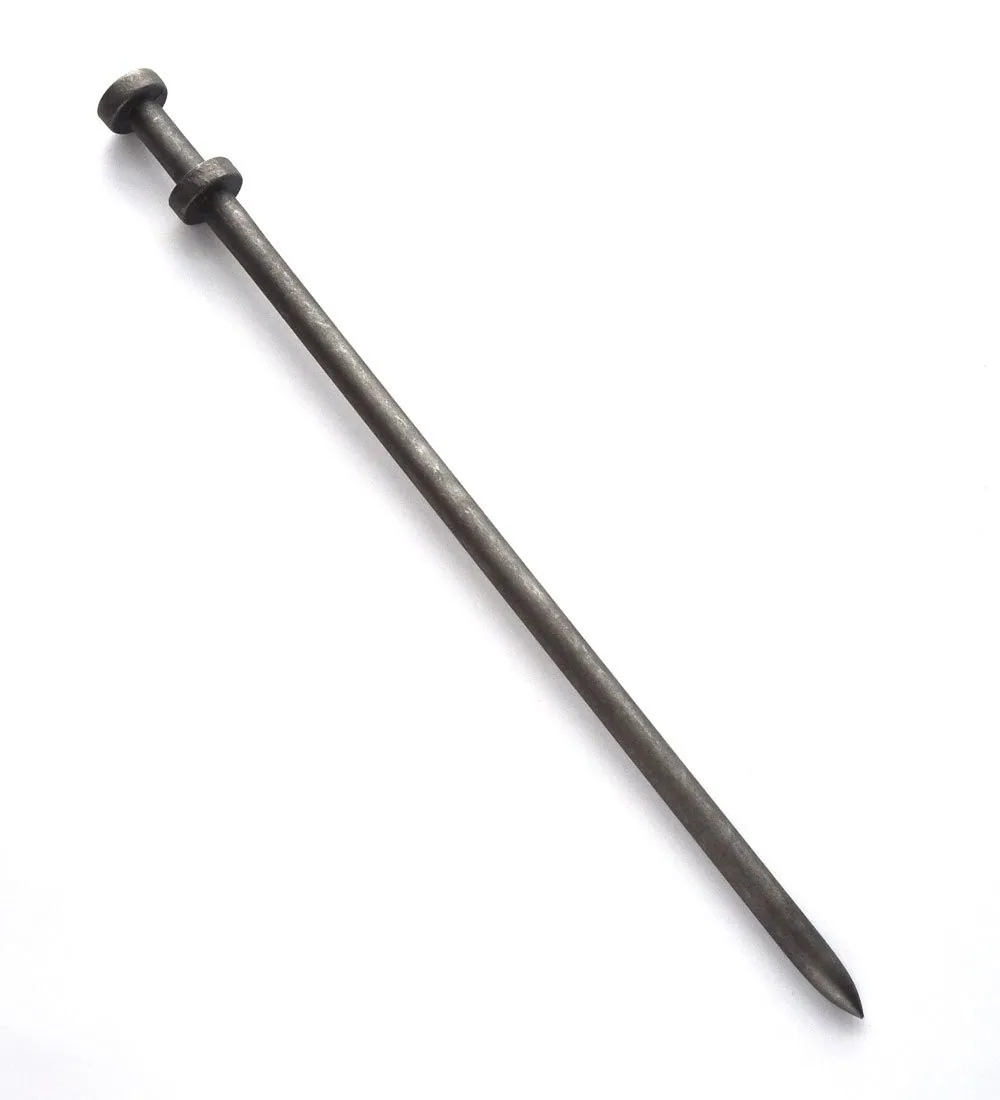
Tiger Stakes — our ground stakes for inflatables and marquees — are available from 16mm to 29mm diameter, meeting or exceeding the EN 14960 minimum of 16mm, and in lengths from 18" (460mm) to 60" (1,530mm), providing substantial embedment depth beyond the 380mm minimum.
The diameter advantage is straightforward: a 26mm stake provides more friction contact area with the surrounding soil than a 16mm stake of the same length, other things being equal. In most UK soil conditions, this translates to higher actual holding force.
The length range is there for commercial inflatable hire operators working across varied sites. The 30" × 1" Tiger Stake — the size most operators specify as bouncy castle stakes — provides adequate embedment in firm ground. On softer or more variable ground, moving to a 42" or 60" stake increases the embedment depth and the total friction contact area, providing more margin above the 163 kg holding force threshold.
Hogan's heat-drawn point achieves consistent, straight driving depth on hard and compacted ground — the ground conditions where standard stakes deform and fail to reach required depth. For commercial inflatable hire operators who work on event sites with variable ground conditions, a stake that reaches full depth reliably is the difference between a passing and a failing pull test.
Which Tiger Stake for Your Inflatable
A starting point by inflatable and site, based on the sizes above and the EN 14960 minimums. Every setup still needs a pull test to confirm the ground actually holds it.
| Inflatable / Site | Recommended Stake | Anchor Points | Notes |
|---|---|---|---|
| Standard bouncy castle, firm ground | 30″ × 1″ (770mm) | Every anchor point the manufacturer provides | Meets and exceeds the 16mm × 380mm dimensional minimum |
| Larger inflatable, exposed site, or uncertain ground | 36″ × 1″ (920mm) | Every anchor point the manufacturer provides | Additional embedment and holding power over the 30″ |
| Soft, loose, or waterlogged ground | Ask us | Every anchor point the manufacturer provides | EN 14960 fixes the stake spec, so the answer isn't a longer stake: it's every anchor point in use, confirmed with a pull test |
| Multi-unit installations / obstacle courses | Ask us | Every anchor point the manufacturer provides | Tell us the layout and anchor-point count and we'll specify it with you |
Get in Touch
If you are reviewing your inflatable staking inventory for PIPA compliance, or have a specific site or ground condition question, get in touch.
Email: hoganuk [at] hoganstakes.co.uk
Contact form: hoganstakes.co.uk/contact
Product range: hoganstakes.co.uk/products
Citations:
BS EN 14960 — reference via PIPA: pipa.org.uk |
HSE: Bouncy Castles Safety Advice: hse.gov.uk |
Better Bounce: What is EN14960: better-bounce.co.uk |
IOSH Magazine: Manslaughter Conviction: ioshmagazine.com |
IFAI Pullout Capacity Pocket Guide: tent.textiles.org |
InTents Magazine: Anchoring in Wet Soil: intentsmag.com
More from the Hogan Stakes Resource Library
EN14960 Ground Anchoring: What Your PIPA Inspector Is Looking For
The original compliance guide covering what EN14960 requires, what PIPA inspectors check on-site, and what it means for inflatable hire companies choosing and replacing stakes.
Read the Guide →Marquee Stake Specifications by Structure Type
A reference guide mapping stake length, diameter, and specification to every major event structure type — including inflatables versus EN 14960 minimums.
Read the Guide →The Complete Guide to Marquee Anchoring on Hard Ground
UK ground types, why mild steel fails, IFAI holding power data, and how to match your stake specification to the ground you are actually working on.
Read the Guide →Common Questions
What does EN 14960 require for inflatable ground anchoring?
EN 14960 requires a minimum stake diameter of 16mm, minimum length of 380mm, and each anchor point must achieve a minimum holding force of 163 kg (approximately 1,600 N). Tiger Stakes 30" (770mm × 26mm) meet and exceed the dimensional minimums. Stakes must be driven at 30–45° from vertical with no more than 25mm protruding above ground.
Do PIPA inspectors check inflatable stakes?
Yes. PIPA annual inspections cover ground anchoring systems for outdoor inflatables alongside the inflatable itself. Inspectors check stake dimensions, condition, and installation angle. Bent, deformed, or undersized stakes are grounds for a failed inspection, which means the unit cannot be legally operated.
What size stakes for bouncy castles?
The EN 14960 dimensional minimum is 16mm diameter and 380mm length. Tiger Stakes 30" × 1" (770mm × 26mm) meet and exceed both. For larger inflatables, exposed sites, or uncertain ground, the 36" Tiger Stake provides additional embedment and holding power — always consult the inflatable manufacturer's specification where one is provided.
How often should inflatable anchor stakes be pull tested?
Pull testing a sample of anchor positions before public use is good practice under EN 14960. In unfamiliar ground, or where conditions are softer than expected, testing gives the actual holding force rather than an assumed value. The EN 14960 minimum holding force per anchor is 163 kg — pull test results below this require remediation before the inflatable is operated.
How many stakes does a bouncy castle need?
EN 14960 sets a minimum of six anchor points per inflatable, each rated to hold 163 kg of pull-out force. That's the floor, not a target — a larger inflatable, or one on ground that doesn't grip well, may need more. If you're unsure how many your structure needs, get in touch and we can work it through with you.
Will bouncy castle stakes hold in wet or waterlogged ground?
Wet or loose ground holds less per metre of embedment than firm ground, so a compliant stake can still under-perform on the pull test. EN 14960 fixes the stake spec, so the answer isn't a longer stake — it's more anchor points, or a weight-based system where the ground won't grip. Uncertain ground — get in touch.
Products referenced in this guide
Anchoring inflatables to EN 14960?
The 30″ Tiger Stake (26mm × 770mm) exceeds the 16mm × 380mm minimum and is the size most inflatable hire operators specify. Tell us your setup and we'll help you get the arrangement right.