Hardness vs Toughness: Why the Best Tent Stake Isn't the Hardest Steel
Ask what makes a good steel stake and the answer usually comes back "hard steel" — which is only half an answer. The property that actually keeps a stake in service across a season rarely gets a mention, because it never shows up anywhere you can see it.
Hardness and toughness are two different jobs
Hardness is the property most people picture when they think of good steel: resistance to being dented, scratched or pushed out of shape. A hard steel holds its geometry under concentrated pressure — load a small area heavily and the surface stays the shape it was made. For any component that has to keep a working edge or a working point, hardness is what preserves it.
Toughness is a different property altogether: the ability to absorb energy — an impact, a shock load, a sudden lever — without cracking. (This is what materials engineers usually call impact toughness — the same kind of property a Charpy test assesses, by swinging a weighted hammer into a notched sample and reading how much energy the fracture absorbed. It's the relevant kind of toughness for a component that takes repeated blows, which is exactly what a stake does.) A tough steel takes the hit and, if the load is beyond it, deforms rather than fractures. Where hardness is about holding a shape, toughness is about surviving abuse.
The two are easy to run together, and a workshop example keeps them apart. An old file is hard enough to cut most other steels — and it can still snap like a biscuit if you lever on it, because the treatment that made it hard left it with little tolerance for shock. Hard is not the same as strong, and it is certainly not the same as durable.
Why "which is the hardest?" is the wrong question
Here is the trap waiting for anyone comparing stakes on gut feel. In steel, hardness and toughness tend to pull against each other: the alloy and heat-treatment choices that push hardness up generally pull toughness down, and steel pushed far enough towards maximum hardness becomes brittle. Getting a useful measure of both in one component is the difficult part — it's the balance a good manufacturer is paid to strike.
A stake made from the hardest steel available would hold a beautiful point. It would also tend to be the stake in the rack most likely to fail suddenly — not by bending, but by letting go — the day it met a shock it couldn't absorb. And the two failure types are not equal. A tough stake that meets a load beyond it bends, visibly, and gets pulled at kit inspection before it goes back in the ground. A brittle stake can fracture without warning, and a failed anchor under a tensioned structure picks its own moment.
So "which stake is the hardest?" is the wrong question. The right one is: where has the hardness been put, and what has it cost?
Where a stake needs each property
For a tent stake, the two properties belong in different places.
The point wants hardness. Every blow of driving is delivered through the tip into whatever the ground is hiding — compacted clay, chalk, buried aggregate. A point that can't hold its geometry mushrooms, blunts or folds over, and a deformed tip steers: the stake tracks off line, seats badly, and comes out on an angle. What that costs across a job — and why a bent stake should be retired rather than straightened — is covered in Why Marquee Stakes Bend. Technique carries some of the load too; even a good point rewards being driven properly, and How to Drive Tent Stakes covers the method.
The shaft wants toughness. It takes the shock of every blow the point passes back, the levering of extraction, and the shifting loads a guyed structure feeds into its anchors over a windy weekend. When a shaft finally meets a load beyond it, toughness is what keeps the failure honest — a bend you can see and retire, rather than a snap that gives no warning.
That split is why chasing a single property fails. Chase high hardness through the whole stake and you risk losing the shaft's toughness. Leave all of it too soft and you risk the point deforming on the first hard ground of the season. A stake is one piece of steel asked to do two jobs.
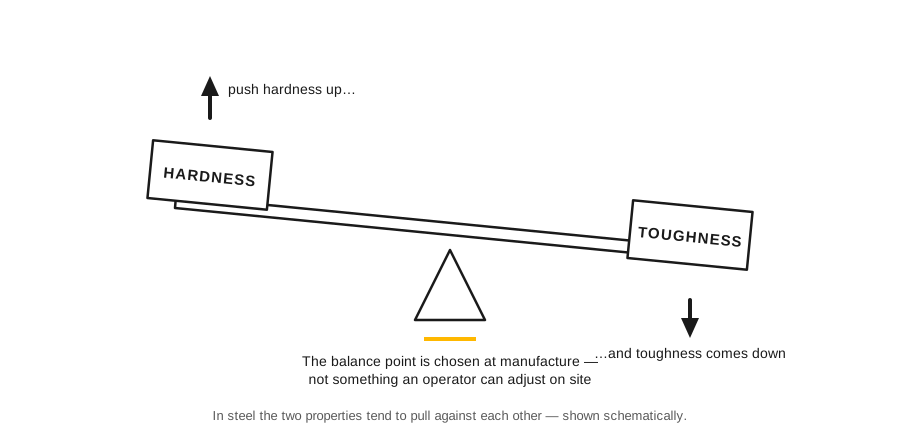
The balance is struck at manufacture — and you can't see it on the shelf
So how does a manufacturer put hardness where the punishment concentrates and toughness where the abuse is spread out? Through choices the buyer never sees: the alloy recipe, the heat treatment, and how the steel is worked on its way to becoming a stake. (What working the steel does to its insides — and why a forged point behaves differently from a cut one — is the subject of a companion piece: Forged vs Cast Tent Stakes.)
All of it is largely settled before the stake reaches the shelf — hard service can still take its toll later — and none of it is visible when it gets there. Two stakes of the same length, diameter and finish can be completely different products inside. It cuts the other way too: most stakes sold in the UK are not made from a consistent grade of steel, with steel choice often fluctuating with price and availability — so even two stakes from the same supplier aren't guaranteed to be the same product twice. Commodity mild steel brings its own problem: whilst more accommodating to flexing, it deforms under load and does not return to its original shape — neither lasting hardness at the point nor useful resilience in the shaft.
Getting that balance right deliberately, batch after batch, is a large part of what you're paying for in a premium stake — and it is the thinking behind a Tiger Stake. The high alloy steel Hogan uses was created specially for them — a recipe of their own, manufactured for one job: tent stakes of the highest quality. The patented heat-drawn point addresses the tip directly: it resists tip deformation on hard driving, which is why the point that went into compacted ground comes out ready for the next job.
Frequently asked questions
Is a harder tent stake always a better tent stake?
No. Hardness earns its keep at the point, where the stake has to hold its geometry through hard driving. But hardness and toughness generally trade off in steel, so a stake that chased maximum hardness throughout would gain brittleness with it — and a brittle stake can fail suddenly rather than bend visibly. The better question is whether the manufacturer has balanced the two deliberately: hardness where the impact concentrates, toughness through the body of the stake.
Can you tell how tough a stake is by looking at it?
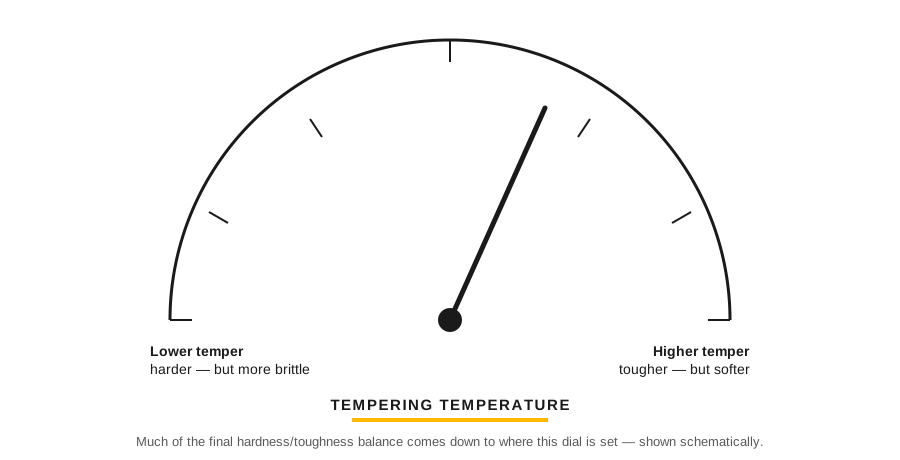
No — and that is the uncomfortable part. Alloy content and heat treatment leave nothing to see on the surface — and much of the final hardness/toughness balance comes down to tempering temperature, the reheating step after hardening that trades some hardness back for toughness — so two identical-looking stakes can behave completely differently in the ground. Most stakes sold in the UK are not made from a consistent grade of steel, which means the same product line can vary from batch to batch. What you're really buying is the manufacturer's process and their consistency — so it's worth asking a supplier what their stakes are made from and how, and treating a vague answer as an answer.
How do Hogan Tiger Stakes balance hardness and toughness?
Tiger Stakes are made in the USA by Hogan Manufacturing, who have been making premium tent and marquee stakes since 1948, from high alloy steel — a recipe created specially for Hogan — with a patented heat-drawn point that resists tip deformation on hard driving. The range runs to eight sizes, from 18" × 5/8" up to 60" × 1.125". If you want to talk through which size suits your structures and ground, get in touch.
Are premium tent stakes actually worth the extra cost?
Across a season, a hire company drives and extracts thousands of stakes. The time and effort saved per stake is small on its own, but multiplied across every installation it adds up to a real, measurable difference — fewer bent stakes to sort, fewer callbacks, less kit replaced. It isn't dramatic on a single job. It compounds.
What's the difference between a forged and a cast tent stake?
A forged stake is shaped under pressure from a single piece of steel — no welding, no casting, no cutting to shape. Casting pours molten steel into a mould, which can leave weaker points where the metal cools unevenly. Forging keeps the material's grain structure intact end to end, which is part of why it resists bending better under repeated impact.
Citations:
TWI: What is a Charpy Impact Test?: twi-global.com
Talk to Hogan
If you're weighing up a stake inventory and want a straight conversation about steel, sizes and ground conditions — no hard sell — get in touch. We're happy to advise, whether or not Hogan stakes turn out to be the right fit for your operation.
Email: hoganuk [at] hoganstakes.co.uk
Contact form: hoganstakes.co.uk/contact
Product range: Tiger Stakes